

Silver Birch
Betula Pendula
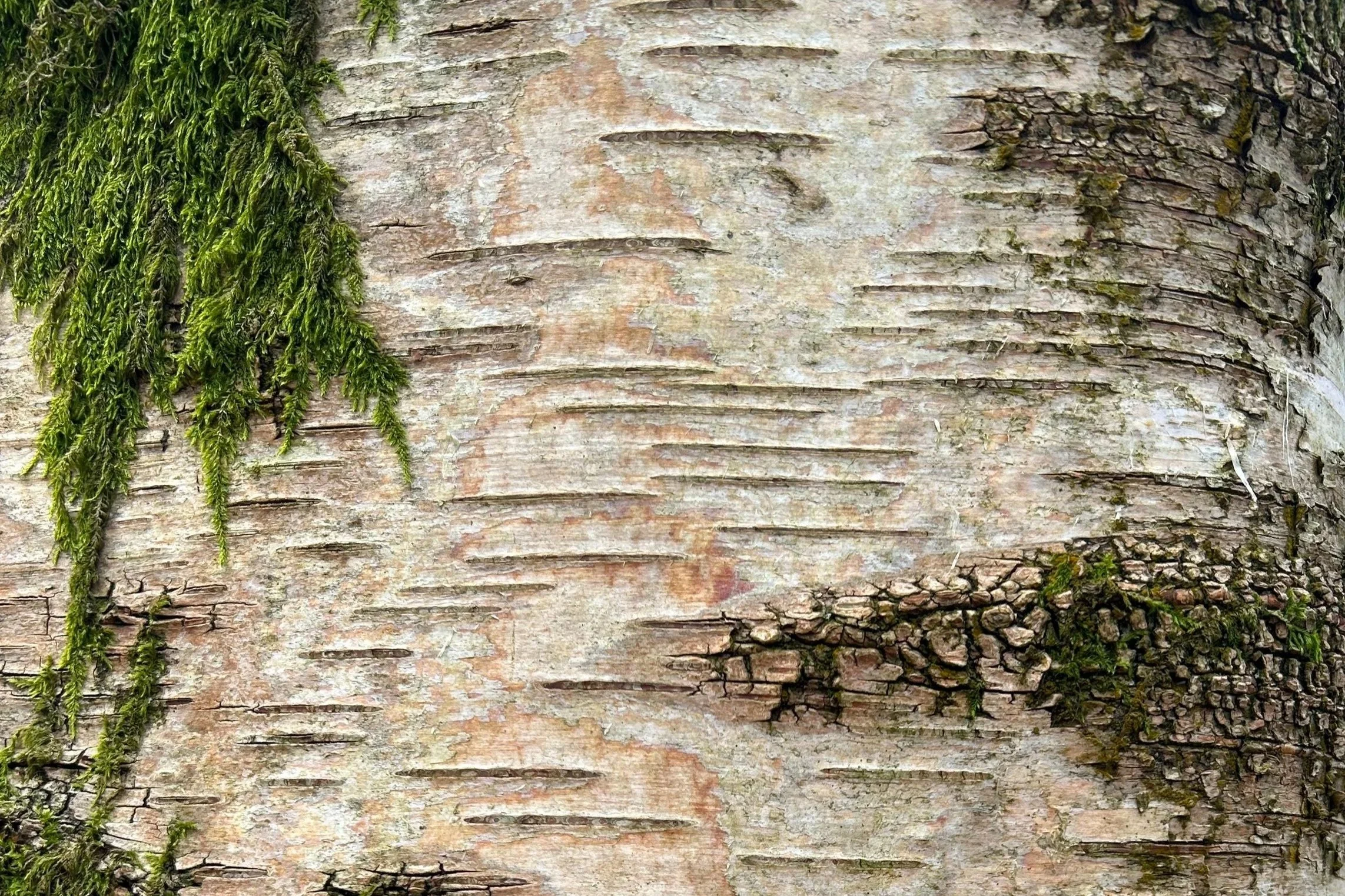
Birch (Betula) are some of the most sharing trees to humans, animals and other plants. As a pioneer species, they are some of the first to colonise an area of cleared land by producing a huge amount of seeds which are easily carried up to a kilometre using wind dispersal. Fast germination and fairly fast tree growth are supported by specialised mycorrhizal fungi which help provide nutrients even in poorer soils. Once established, birch woodlands then create a nursery effect - a light, open canopy gives opportunities for other slower growing tree species and plants to grow underneath while over time, fallen and decaying birches bring rich nutrients back to the soil.
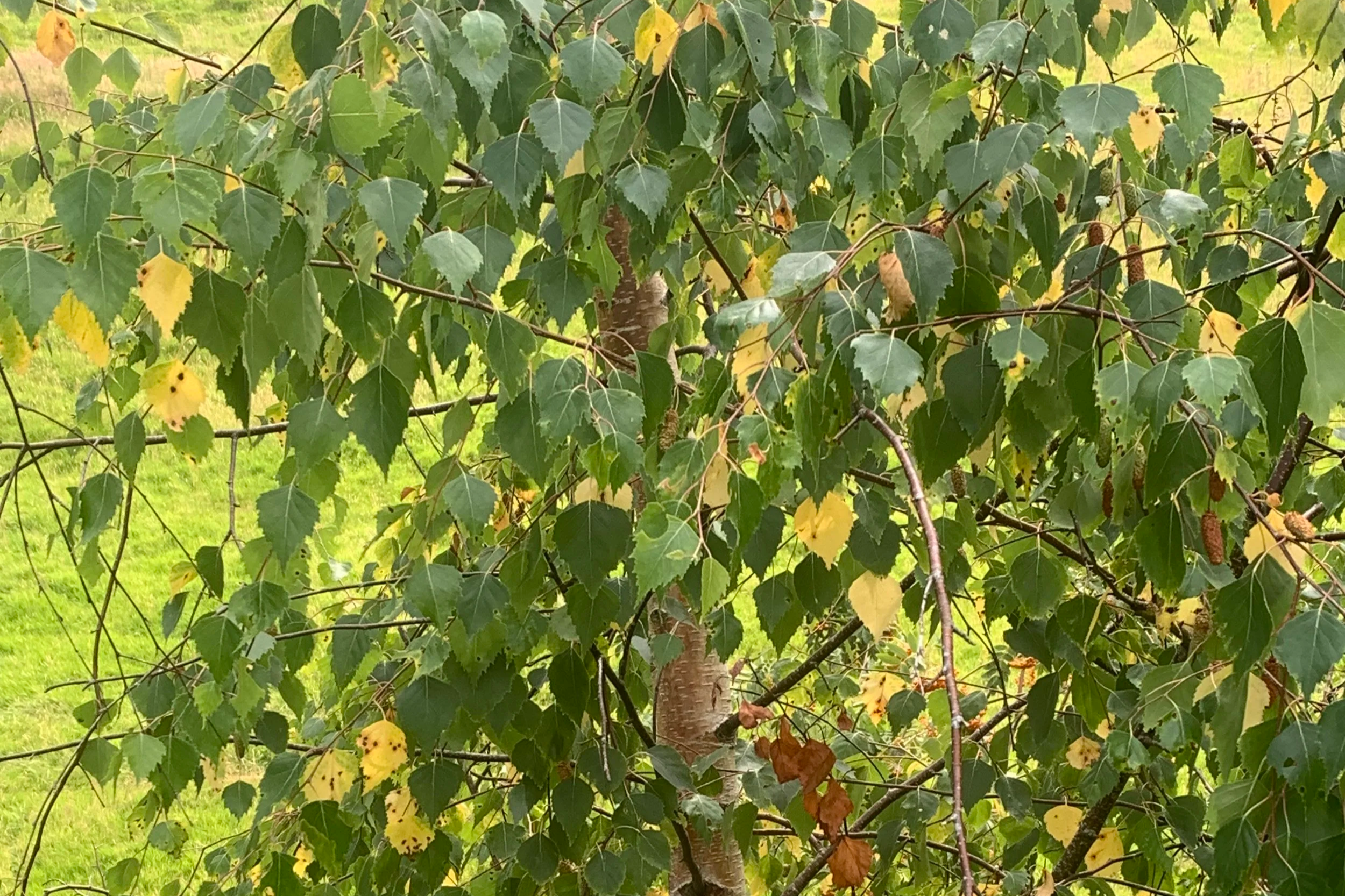
Juvenile Silver Birch (Betula Pendula)
Identifying birch, particularly silver birch, is definitely one of the easier species to learn. It’s distinctive bark, while having some familiarity to other species, is hard to confuse entirely with it’s bright white colouration (slight orange/red hues when younger) which crags with age from the base upwards. Another colour the tree brings is a distinct purple hue when the serrated, arrowhead leaves have departed for the year. Pockets of birch woodland are unmistakable even at a distance creating almost wispy, purple, cloud-like structures.
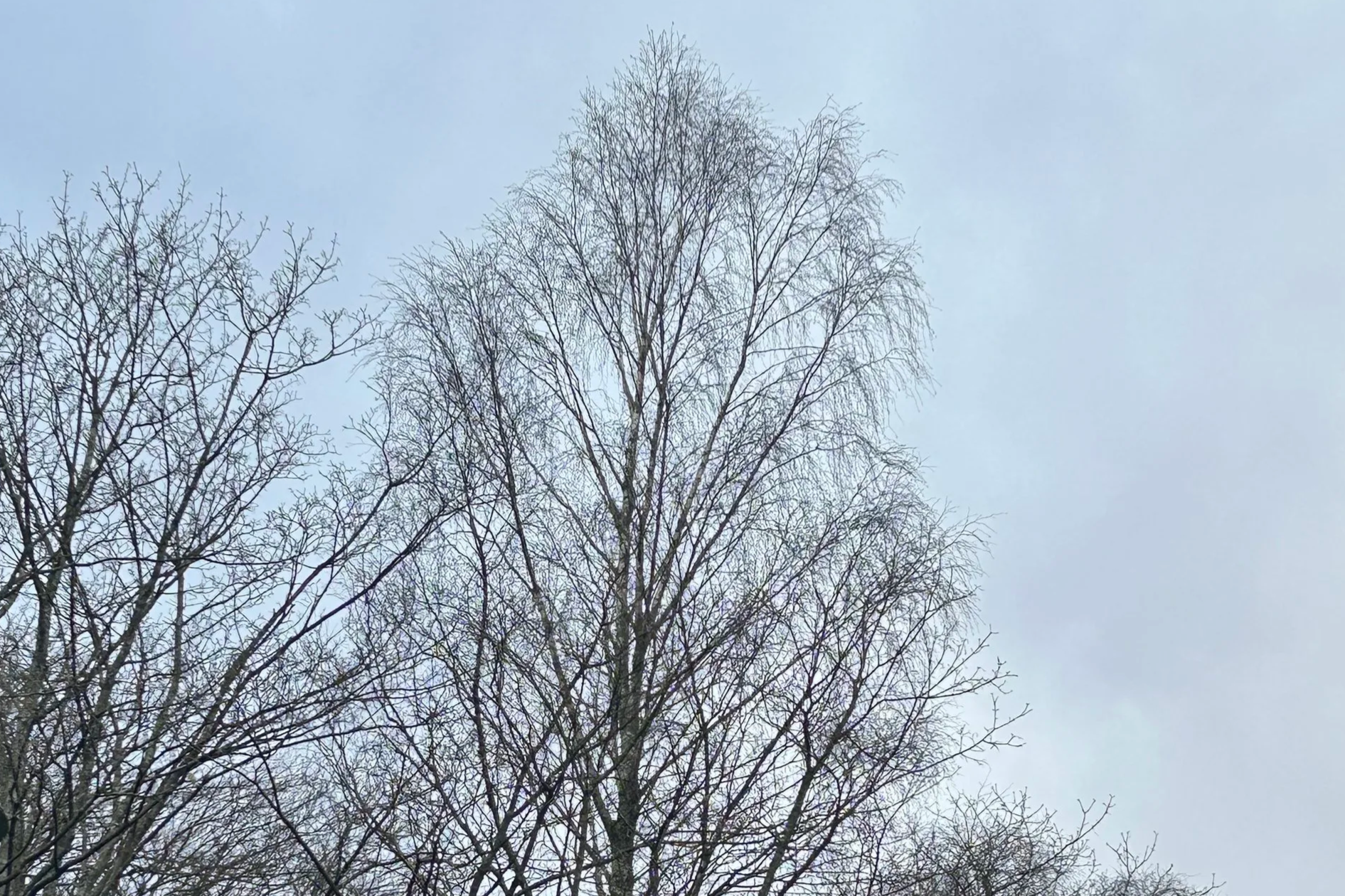
Betula Pendula winter silhouette
As is common for plants, the meaning in the Latin name (Betula Pendula) is itself a descriptor for the tree and can provide us with extra information for identification and use. The bark of birch trees contain betulin. This oil helps to protect the tree from external water (which also means the tree rots from the inside so be careful when leaning on them) and it has also provided humans with both a tinder and a source of oil for thousands of years. Roman authors mention celtic tribes extracting the oil for medicinal and craft use which is something people still do today for a variety of uses.
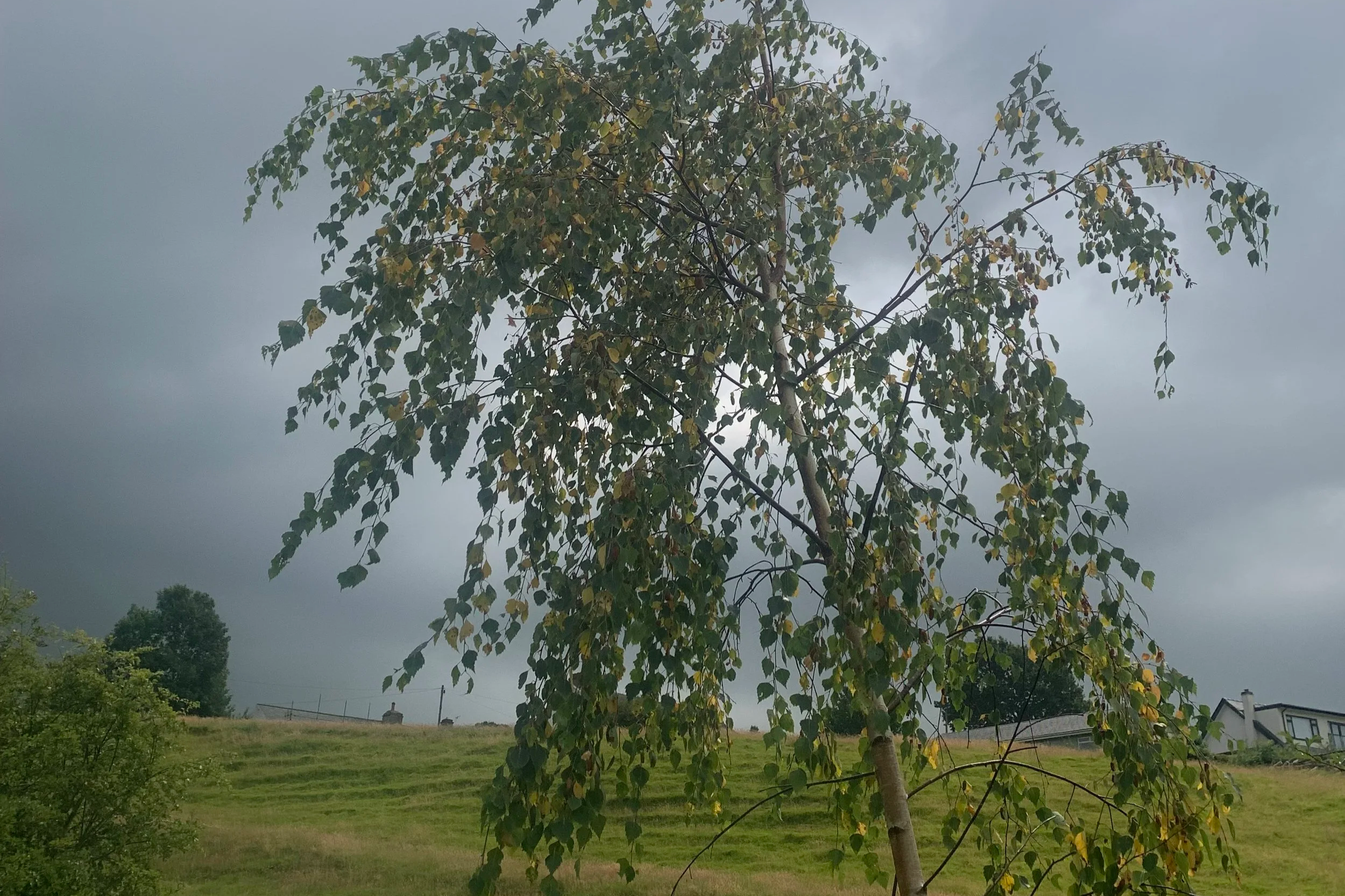
Silver birch drooping branches
Pendula is derived from the Latin ‘pendulus’ which means ‘hanging down’ or ‘drooping’ due to the character of the trees branch tips. This is a very noticeable feature that most trees do not share. This character is also a key way to differentiate Silver Birch from Downy Birch (Betula Pubescens) which has a more upright growth pattern in the branches.
In terms of uses in bushcraft, Silver Birch is definitely one of the most utilised trees. As a medium density tree the wood burns well but fast - meaning it is not always the best for creating a bed of embers for cooking. As previously mentioned, for fire the bark is really the standout quality. There is some consideration however when it comes to procuring this resource. Unfortunately, due to a particular well known and televised outdoorsman’s example, birch trees up and down the country have been the victims of girdling due to people believing that the way to harvest the bark is to strip rings off a living tree. Cutting through the cambium layer in this way halts the trees ability to transfer moisture and nutrients from the roots to anywhere above the removed bark, signing a sure-fire death sentence for that tree. There are two much more appropriate alternatives. Either, take small strips of bark from already fallen dead trees (only what you need, plenty of life still considers this home) or find a younger tree. Juvenile trees often have small wisps of bark naturally peeling through a shedding process. In a couple of minutes, you can have a decent handful of these papery feathers which will take a spark just as well as scratching dust from a removed piece of bark.
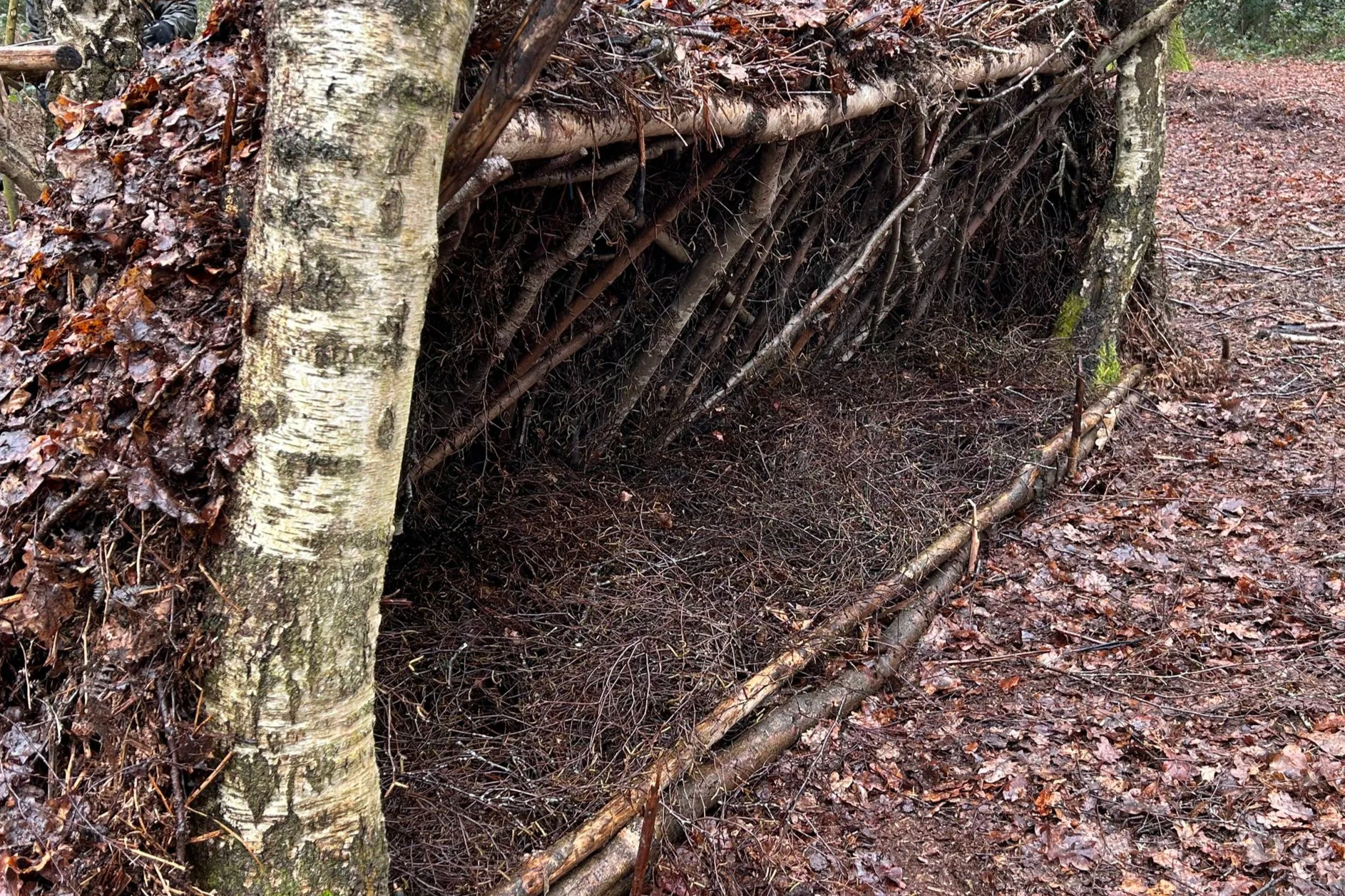
Silver Birch tops mattress in a natural lean-to shelter
Fire is just a small part of the trees usage though. The flexible tips of the branches are a fantastic resource when it comes to crafting. They make a comfortable bedding material akin to a sprung mattress when utilised correctly. Stick the thicker woody ends into the ground inside your shelter until you have a decent 30cm or more of depth. It’s surprising just how comfortable this can be and is definitely one of my favourite bedding materials to use. These tips also get used for many other crafts, one of the most well known being a besom broom. When bound together tightly, they are as effective as any shop bought broom and they really do look the part. Just be sure to make two so that one can be hung on the wall ornamentally with all of your other projects.
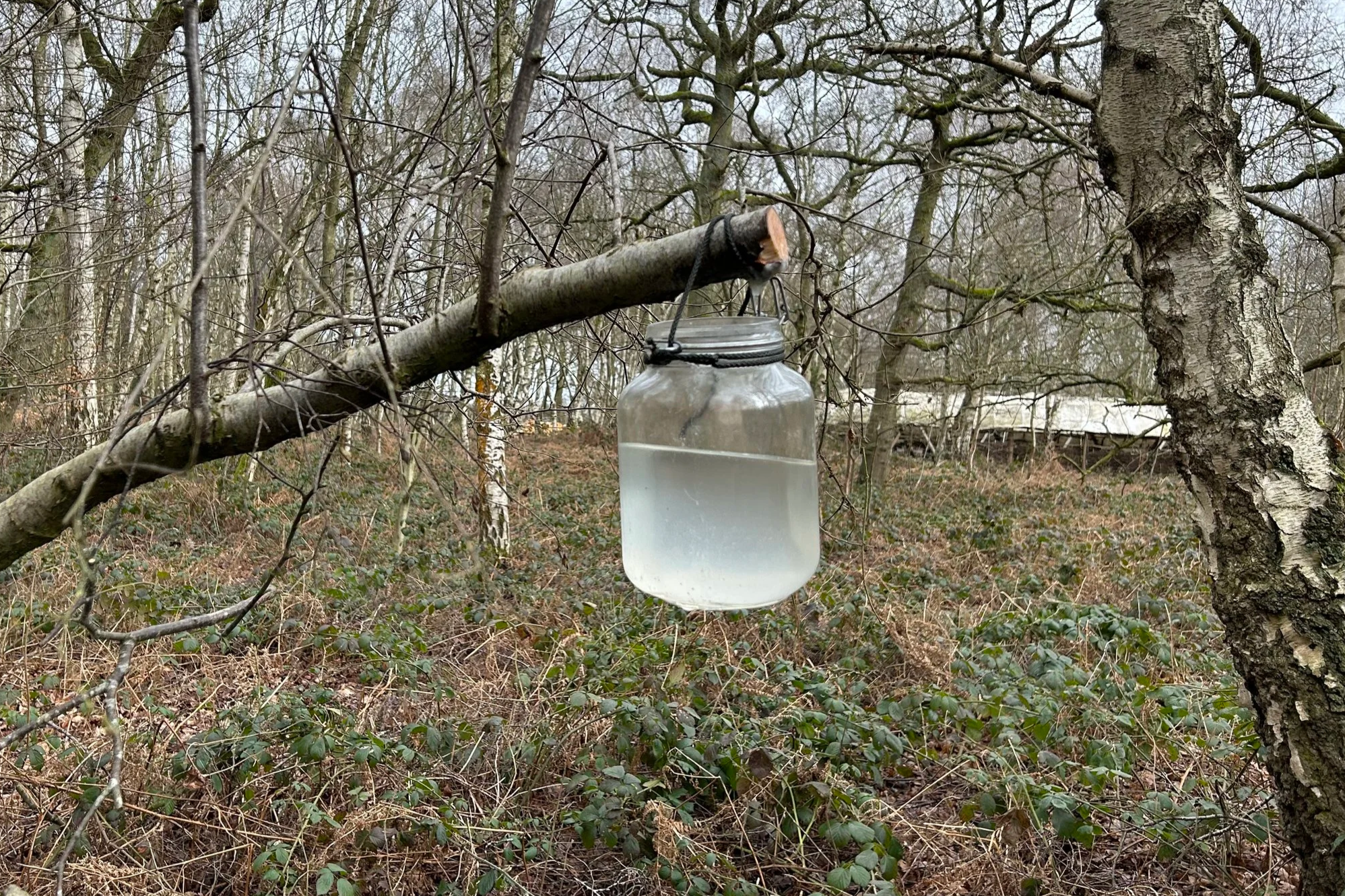
Collecting birch sap with the branch method
Birch sap has been consumed by humans for millennia. Either drunk straight as a subtly sweet water or boiled down into a syrup, for a few weeks each year when the sap is rising it can be harvested without having much of a detrimental effect on the tree. Common practice is to drill a small hole and ‘tap’ the tree, collecting the drips. A few years ago, well known friend, colleague and mentor of mine - Dave Watson of Woodland Survival Crafts fame, shared with me another fantastic way of retrieving this delicious liquid. Rather than tapping (which does have a small chance of letting infection into the main trunk), cut the tip off a small secondary branch lower down the tree and collect from the created wound. The tree will have a much better chance at closing off this pruning, sealing off and letting go of the branch naturally like it would if it was shaded on unproductive.
Birch trees are also well known for the fungi which love to grow on them. Two of the most popular are Birch Polypore (Fomitopsis betulina) and Horsehoof fungus (Fomes fomentarius). The former has a plethora of uses including medicinal, knife stropping and as a tinder. Medicinally, pharmacological studies show it containing active compounds such as triterpenoids, polyporenic acids and piptamine providing anti-bacterial, anti-viral and anti-inflammatory uses when used as a tonic or tea. The porous underside can also be made into field dressings for cuts and to help stem bleeding. Fomes Fomentarius is predominently used in fire craft. The velvety trama layer is used to make the ancient rooted tinder amadou but the whole mushroom can be briefly added to a fire to transport an ember for a whole day.
Silver Birch - what a tree to start with. I could go on more but at the risk of boring you all to tears I will leave it there for this article. As always, if you want to learn more about this or other areas of bushcraft and wilderness living skills, consider booking a session with us (click here) where we can tailor the learning to what you need.
For further identification information, I recommend visiting the woodland trust website (click here) which is always informative for native UK species.