

Knife Use Tips
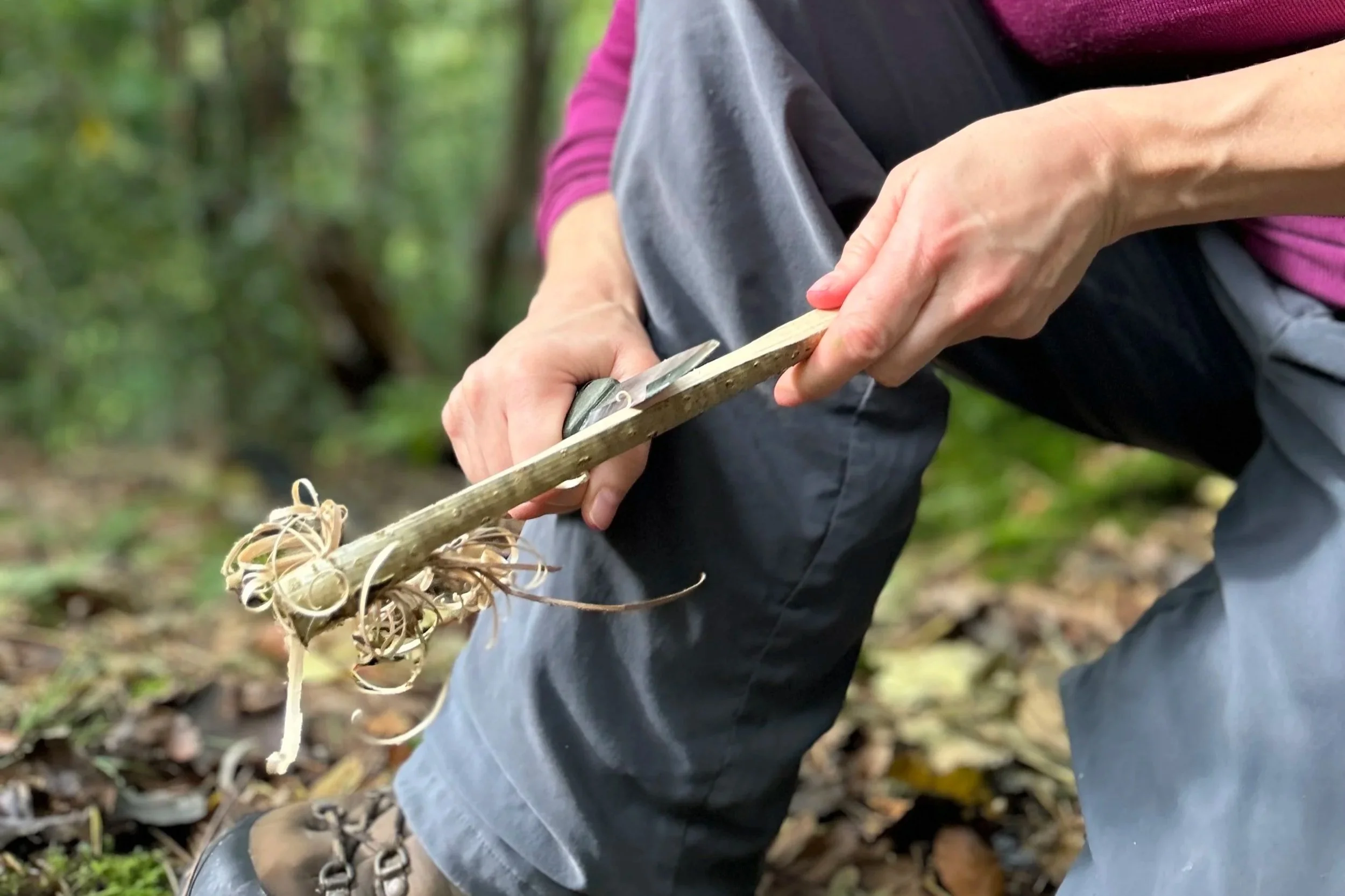
Although using a knife is such a fundamental part of practising bushcraft (in addition to the countless other related disciplines), unless you have undergone formal training it seems to be something where most people are left to figure it out for themselves. It could be that, due to things like cooking and crafting, it is expected that everyone already knows how to use one but you wouldn’t expect the average person to know the nuances of ropework just because they can tie their shoes, context is everything.
Like all of these things, practice and experience will always help to sharpen your skills but there are some general tips and principles to help steer you in the right direction and hone your craft. Hopefully, if this isn’t already the way you use a knife when practising these skills, you will find it useful. Remember though, as you are probably retraining the way you do something you will need to be patient and give it time. It is understandable to get frustrated initially when it feels challenging to do something you already feel confident with but stick with it and you’ll end up with more control as a result.
First things first, do yourself a favour and spend a little more time selecting your wood. You might feel like you have to use whatever is available and yes, sometimes that is the case. However, most of the time there are options. Look for things which have less knots when sourcing your materials. For example, hazel rods growing with side pressure from other plant life have to shoot past everything to reach the light. They don’t dilly dally sending out thick lateral growth that won’t get much light and the difference between sticks on the edge of a clearing and those inside a thicket is stark, not just for side branches but also in terms of their straightness. Also consider what wood you are using – low density wood is going to be easier due to simple physics, but also species differ in how fibrous they are which can be advantageous or detrimental depending on the project. In addition, the difference between green wood and seasoned wood is night and day. Obviously, this will be very project dependent (you won’t be feathering green wood for use in fire) but it is another thing to consider. Green wood is typically easier to remove material from but you can’t get the level of definition you would from seasoned.
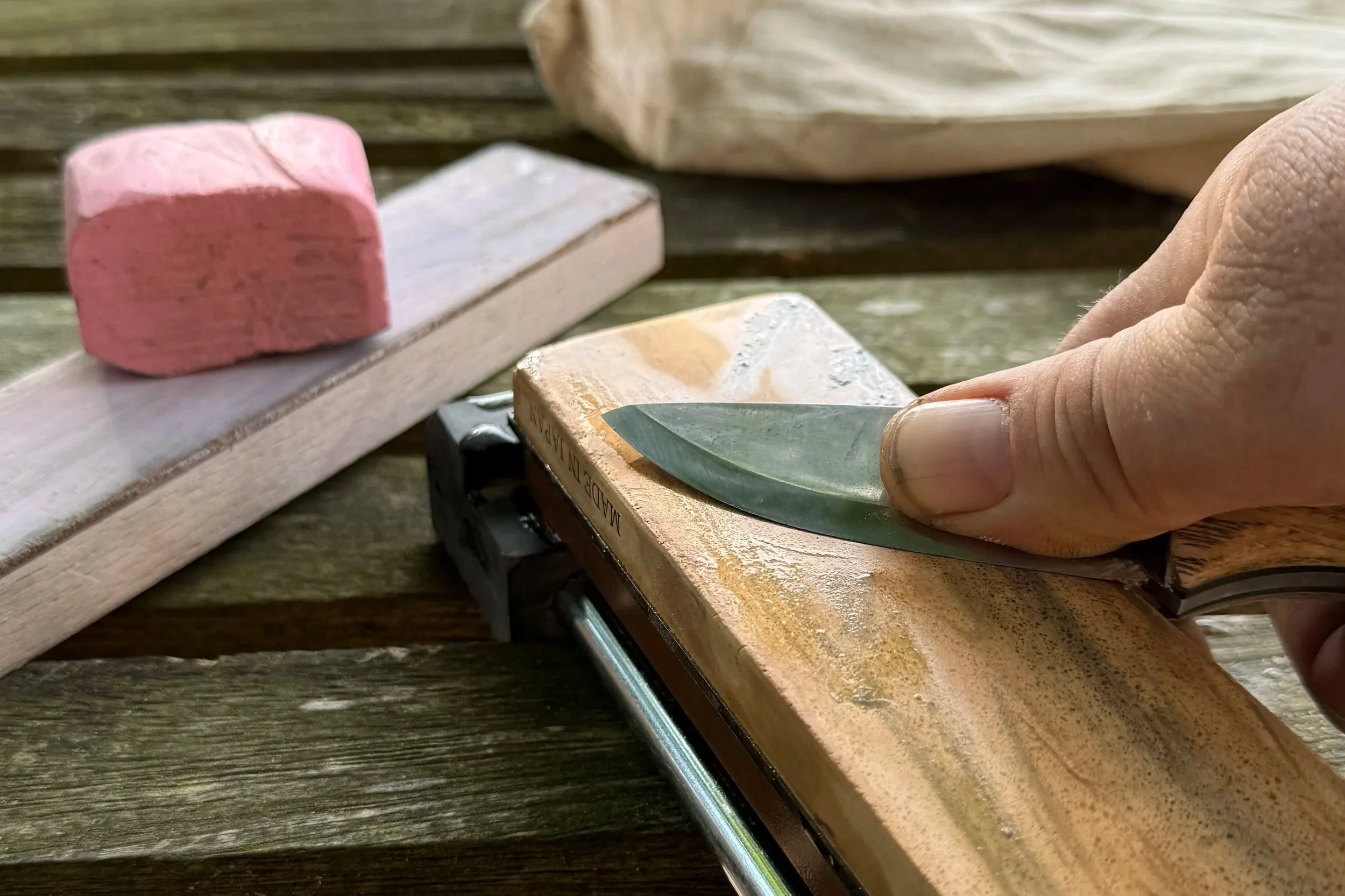
Knife sharpening on a whetstone.
Next, I know it goes without saying but, make sure your knife is actually sharp. Look after your tools and they will pay it back to you. If you can feel it dragging or you are having to put extra pressure on, take the time to sort it – it is safer, more accurate and you will not fatigue as quickly.
Ok, so the first two principles didn’t actually involve using a knife - as always, preparation is the key. Let’s think now though about actually making some cuts. A bit like tying knots, there are abundant ways to use a knife, but we typically use only a handful of techniques – just make sure you are using them for the right purpose.
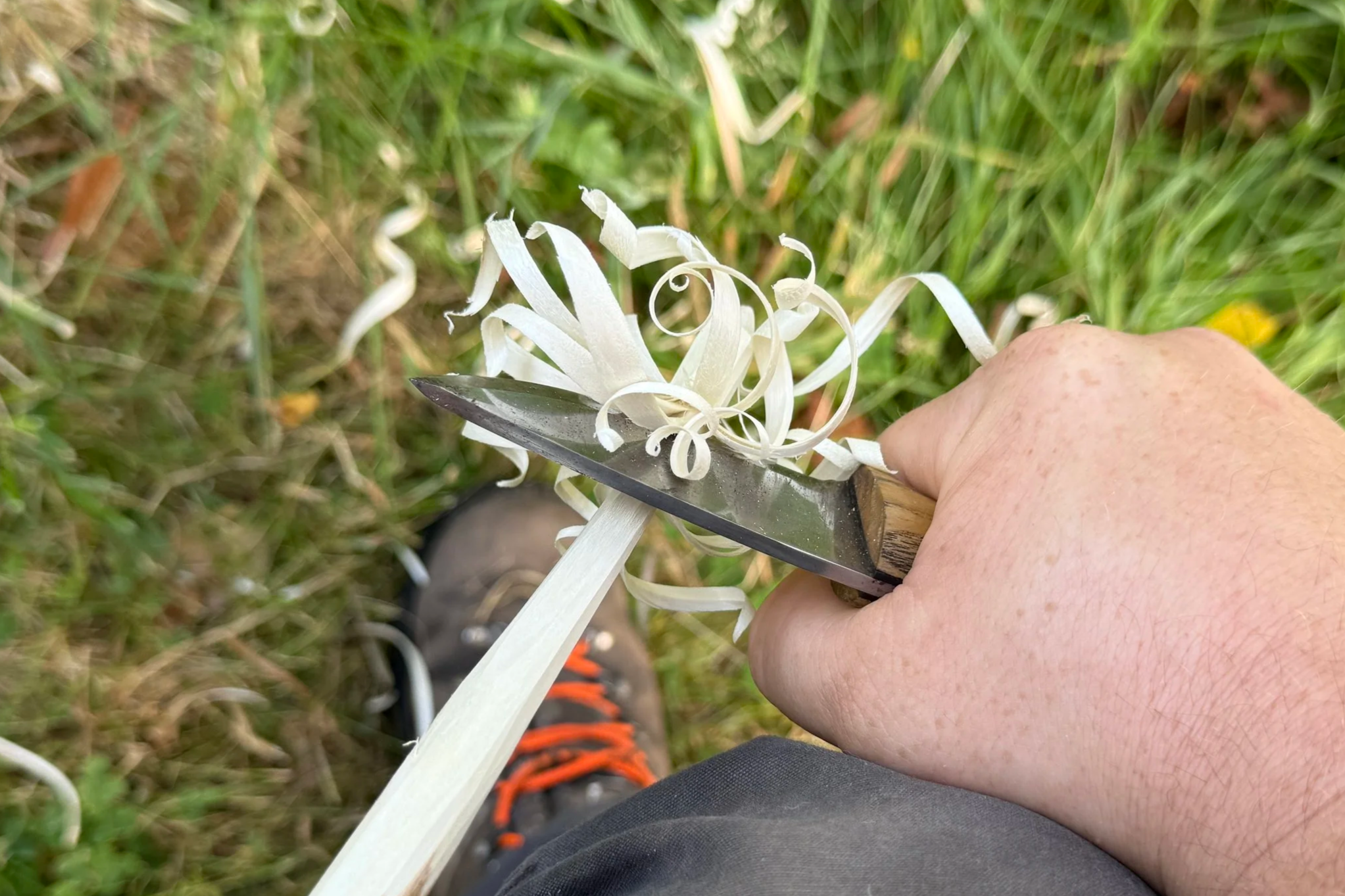
Making a wooden flower.
First, we will focus on longer wood manipulation – tasks such as feathersticks, long points, straight edges for hearthboards etc. Basically, a job where you are reducing material in an area above 5 centimetres up to about half a metre. This is where the whole process really gets tipped on its head. When I ask, ‘show me how you use a knife,’ to a group of adults, without fail the general miming shows a knife hand stroking away from them. Of course, we are always taught to move your tool away from your precious body when working. What’s even safer though, is if the knife doesn’t move at all. Simply, brace your knife. This is the single easiest and course changing tip of knife work. Either kneel or sit, carefully sweep your knife so it is locked in front of your knee and instead of moving the knife, pull the wood towards you.
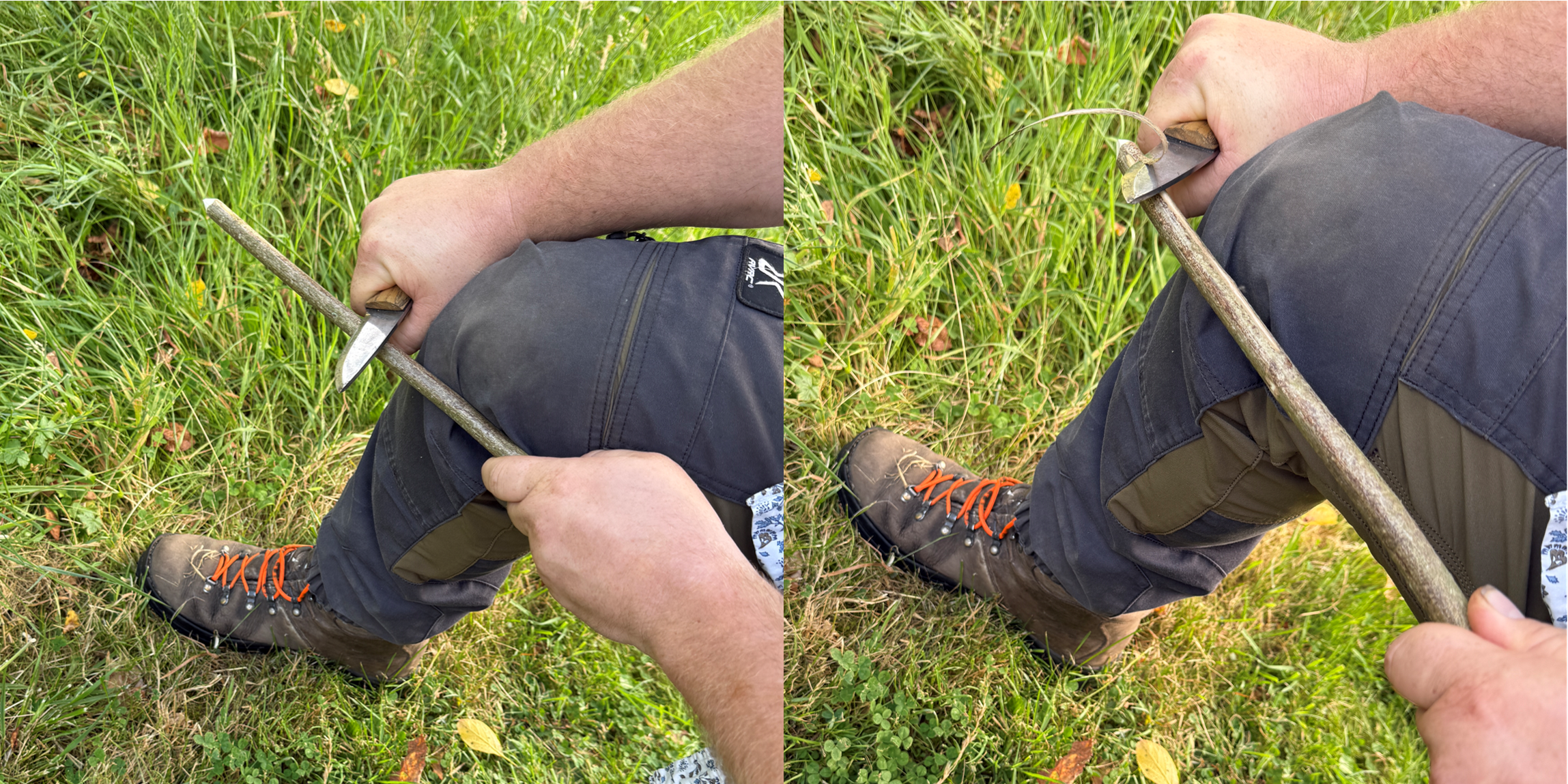
Braced knife, pulling the wood towards the user.
This not only prevents the risk of a knife moving around but also gives you granular control over cutting angles. You can focus on tilting your knife slightly up to remove less material, down for more, or equally as important you can tilt the knife’s tip towards or away allowing it to do what knives were designed for – slicing. This is also how you maximise your curls when feathering or making flowers. If you don’t like kneeling and have no where to sit, find something like a small tree and stand behind it. Now you can brace your knife on that for the same results. Another option is to lock your knife arm to the side and pull the wood towards it. This works well for quickly stripping material but sometimes doesn’t have the nuance for more delicate tasks. The control and consistency you get from employing this technique is unparalleled. Like I said before though, if you are retraining, keep plugging away. It will feel a bit alien at first but with a little practice you will be cutting with so much more strength and precision.
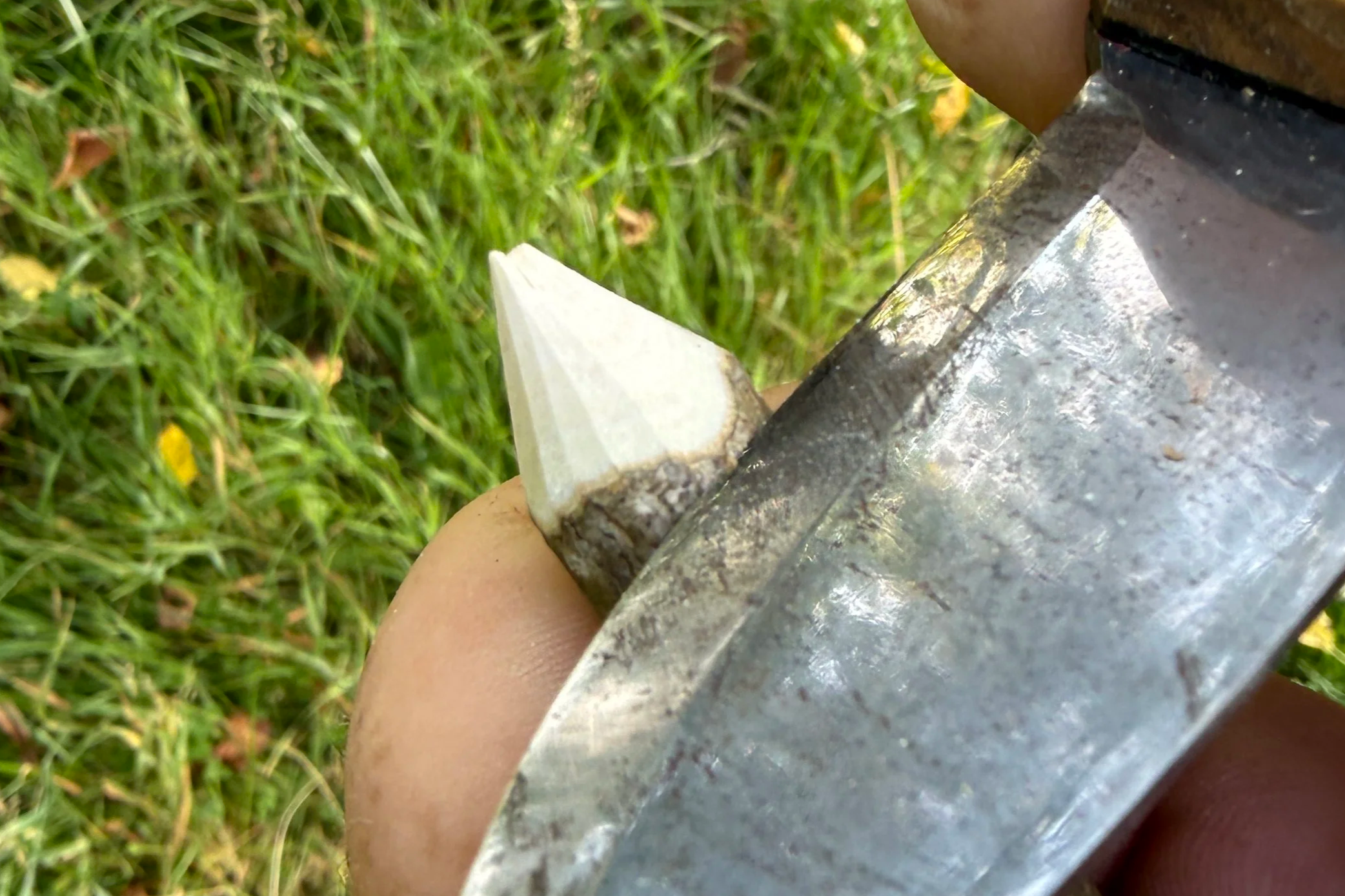
Pointing up.
Now, for smaller work such as pointed tips, chipping domes and stop cut notches. Thumb pushes – it’s pretty ‘say what you see’ but there is potential for subtle improvements. Due to knife size, hand shape and digit length, everyone develops their own style for this. Personally, I just use my off-hand thumb to add further tool manipulation and leverage but some people feel more comfortable using both thumbs on the back of the knife. The real takeaway from this is again – use the knife for what it was designed for – slicing! While pushing, pivot the blade around your thumb and the edge will glide more readily through the wood.
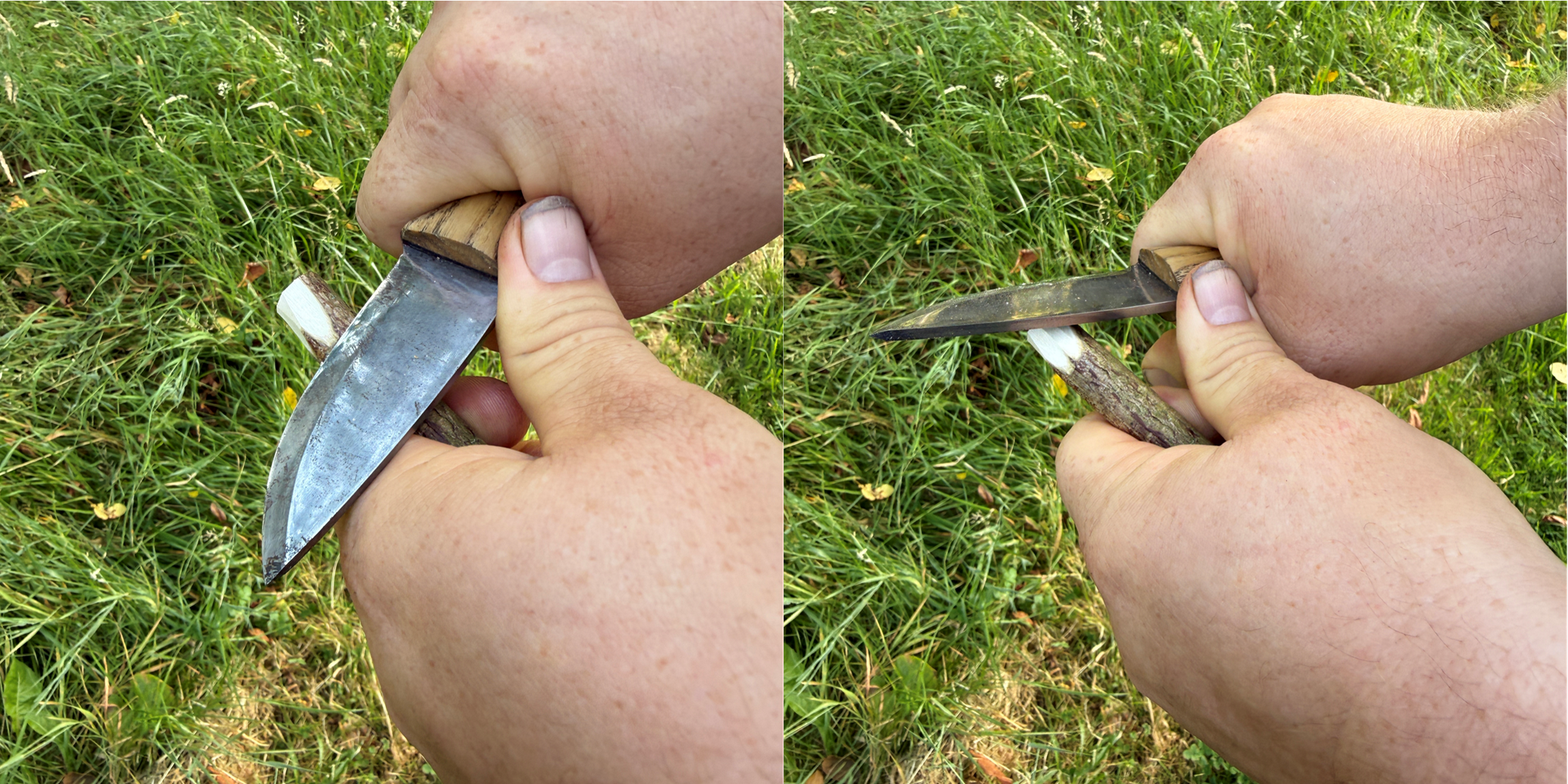
Pivoting the blade to gain leverage and slicing action.
Also, try to avoid scooping. This is a really inefficient way to remove material and it can damage the engineered cutting edge. Focus instead on taking small, smooth chips on a flat plane and employ stop cuts when it is required (explaining that further would require me to go on more of a carving adventure though so I will leave that to another journal entry). By removing less material, you are trying to separate less fibres which means you again have science on your side. This is a useful principle in general for any wood work using hand tools – this is also why splitting half a log is easier than a whole round).
I will leave it there for this journal entry. I really hope it has been useful for you and that it helps you develop your knife work. If you want to look at this in more depth, consider booking a session with us and you can further develop your tool skills here in the Lake District. Click here for more information on sessions.