

Rosebay Willowherb
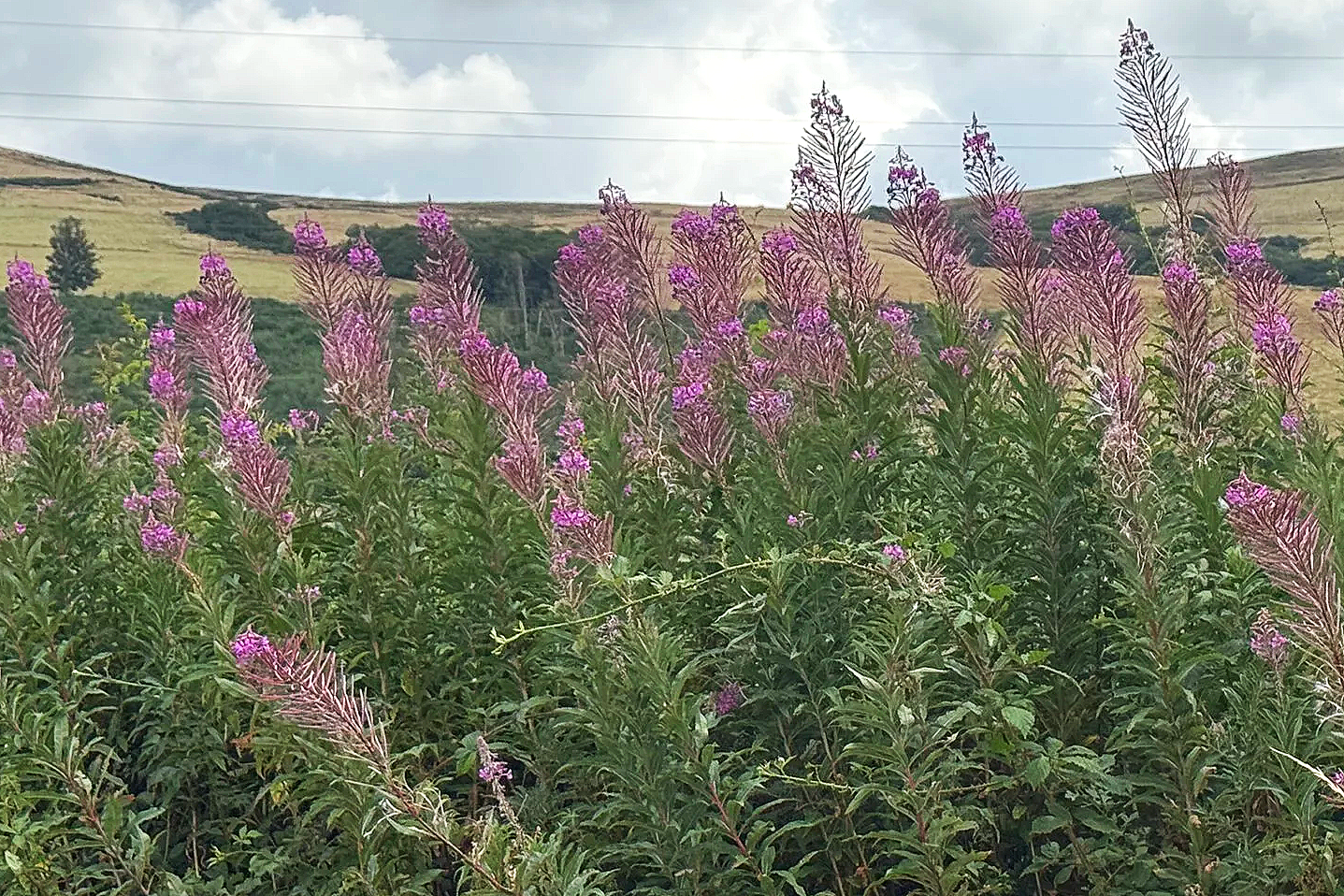
Although there are many types of Willowherb, Rosebay Willowherb (Chamaenerion angustifolium) is the most common. Similar to Birch, featured recently in the Journal, Rosebay Willowherb is a pioneer plant. It is quick to colonise an area of recently disturbed soil which is where the plant gets it’s American nickname ‘fireweed’ due to its habit for being the first to settle in after wildfires. Similarly, during the second world war in the UK it gained the nickname ‘bombweed’ for similar behaviour.
Once it has dug in, it quickly begins to improve the soil by cycling nutrients from deep down, laying down a thick layer of compostable vegetation as it dies back before winter. It’s rapidly extending underground rhizome network does wonders for binding loose ground together even in sandy soils while also punching deep through harder clay or compacted ground to improve drainage and aeration.
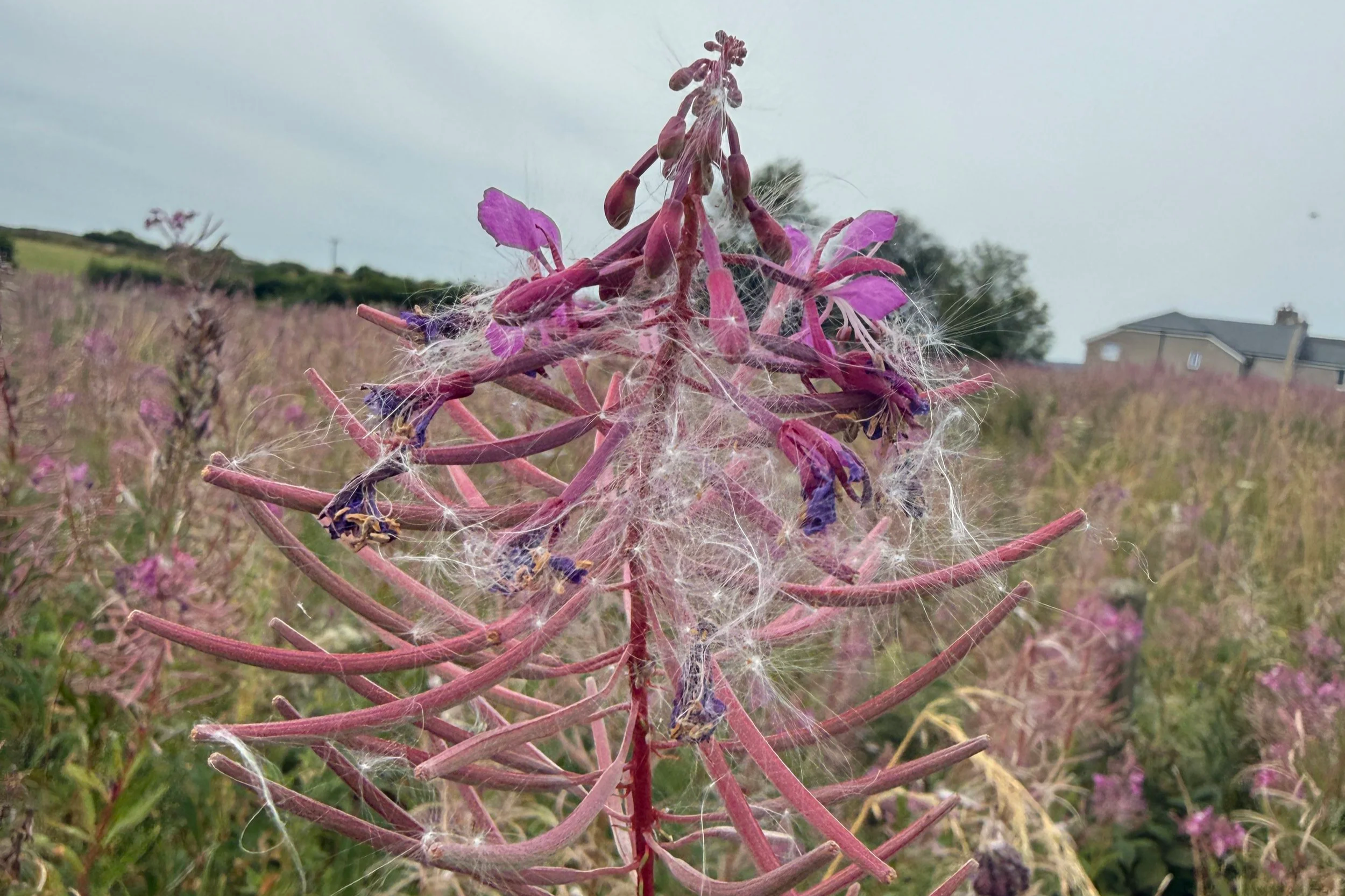
Rosebay Willowherb - mid to late summer - beginning to seed
With each plant having an abundant seed stock - up to 80,000 - it is no surprise how common this plant is. Also, due to their small size and well constructed feathery framework, these seeds can easily travel tens of miles on a breeze.
Growing with tall stalks and narrow leaves similar in appearance to many willows (hence the name) it is an easy one to identify even without seeing the distinctive purple flower head section which transforms into tubular seed pods as the season progresses. As previously mentioned you will often find it in newly turned areas but the small seas of purple are also frequently spotted along roadways or footpaths. It is hard to go for any length of rural walk without spotting.
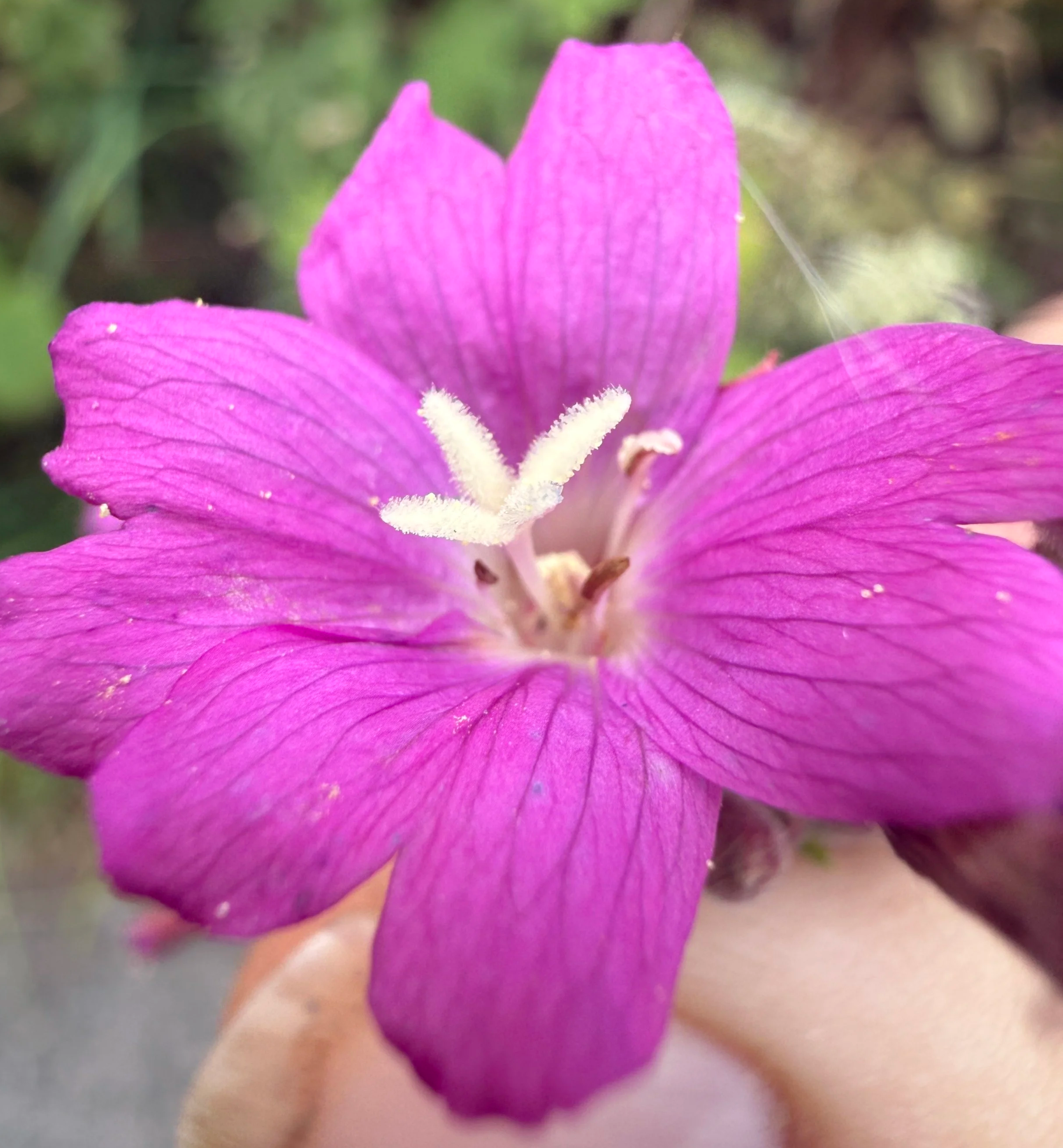
Rosebay Willowherb - open flower
Rosebay Willowherb has myriad uses within the context of wilderness living with good edibility, medicinal benefits, fire craft use and as a natural cordage material.
When it comes to consuming this plant, spring leaves and summer flowers can both be added to salads and even earlier in the year fresh young shoots can be cooked as a vegetable resulting in a similar experience to asparagus. Another popular use is Ivan Chai - dating back to around the 13th century in Slavic regions the leaves were turned into a tea through simple fermentation. Having a similar taste profile to that of oolong, this was one of the largest exports of the area right up until Asian black teas took over the market. It is an easy process involving rolling the leaves and allowing them to sit for a few days where the flavour transforms through natural fermentation to have a malty and fruity profile. Click here for a more in-depth guide.
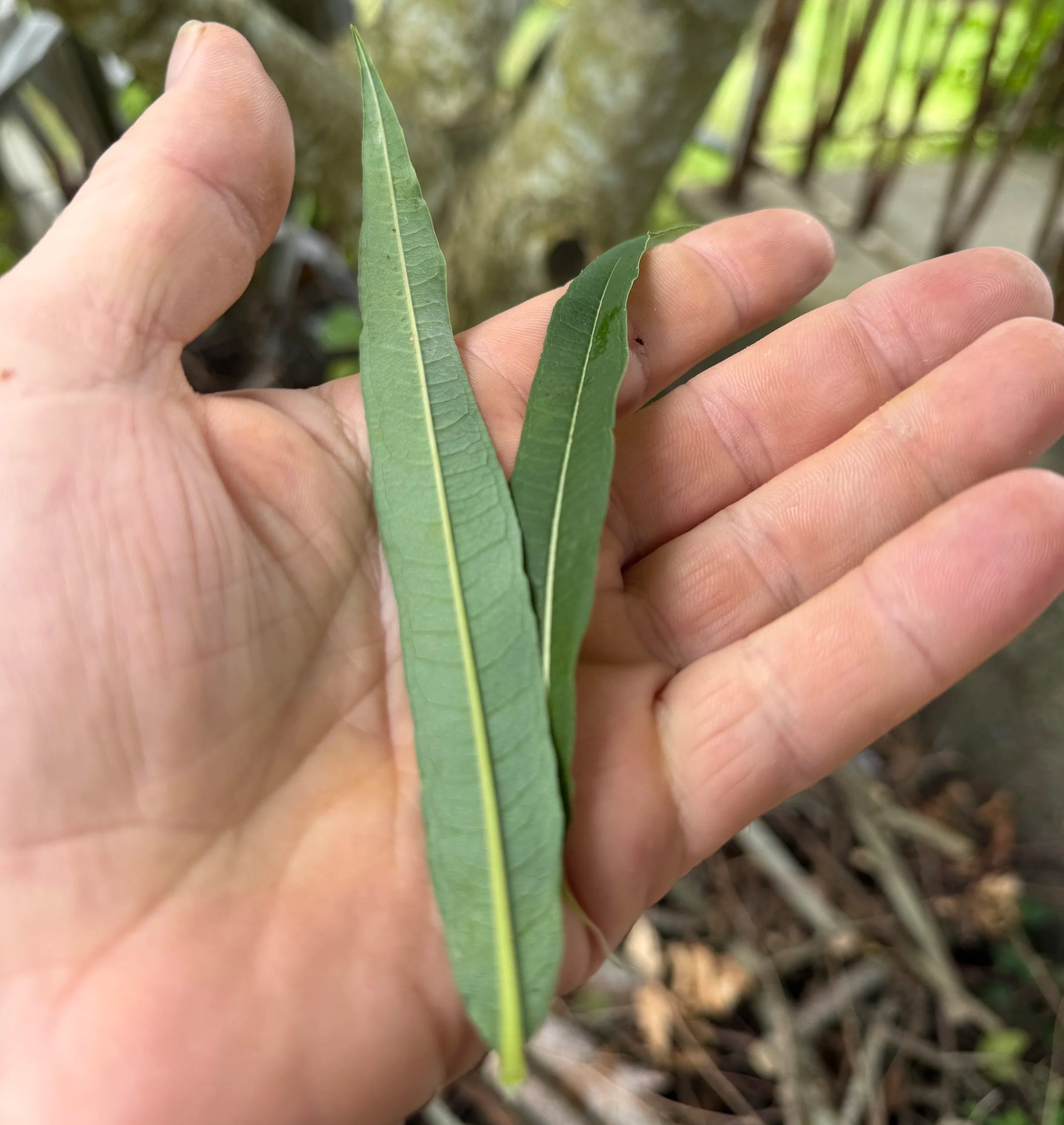
Rosebay Willowherb - Leaves (distinct feature - veins not reaching leaf margin)
Medicinally, Chamaenerion angustifolium is high in both Vitamin A and C (even beating oranges) and has historically been used to relieve digestion problems such as dysentery and severe diarrhoea. It was also used as an astringent for help stem bleeding due to its tannin content. More modern scientific studies have noted decent active compounds and anti-oxidants such as polyphenols which scavenge free radicals and it is promoted for improving prostate health.
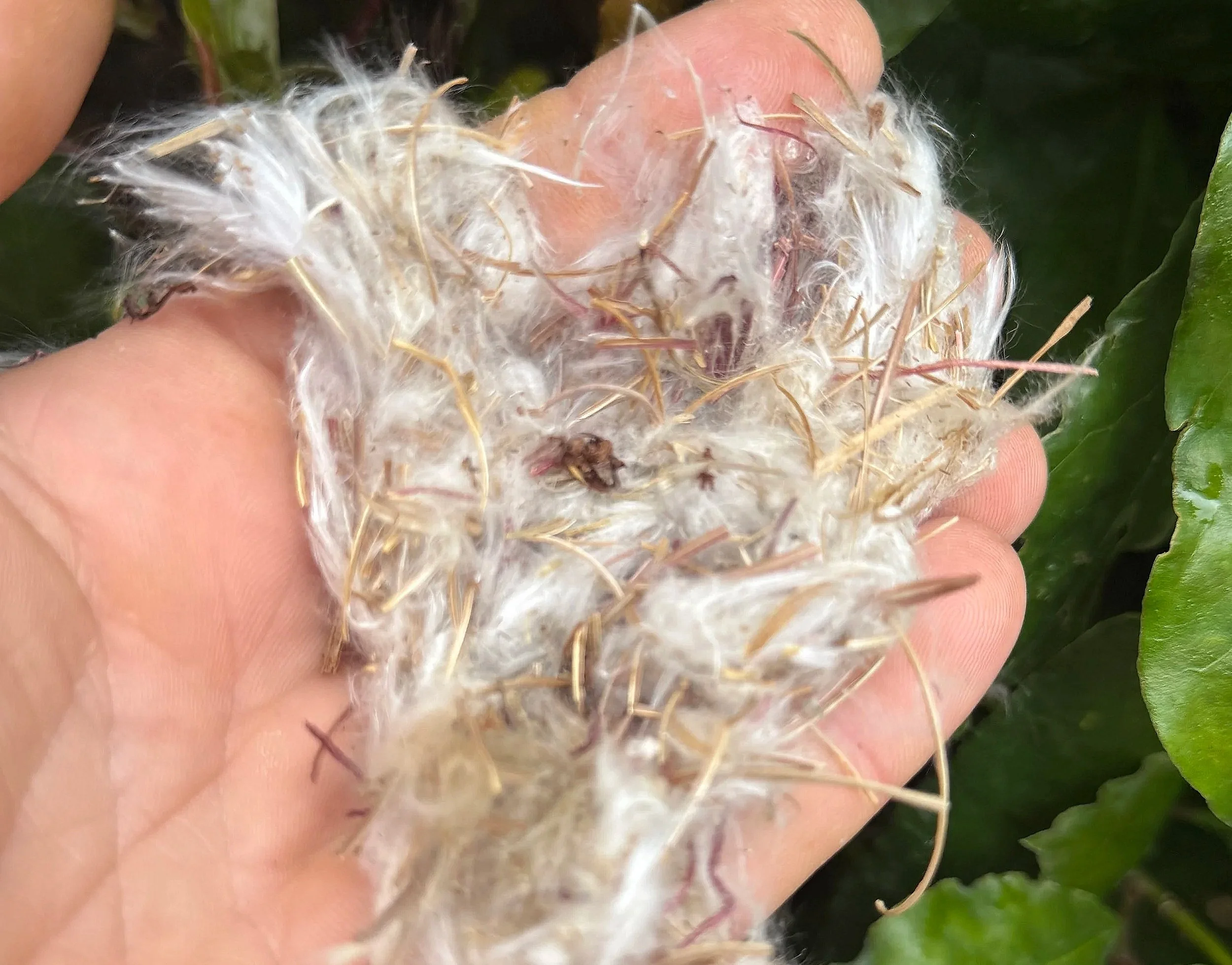
Rosebay Willowherb - Seeds for tinder
As this plant spreads its seed through wind dispersal, it can be immediately considered for use as a tinder. As with other plants utilising this method such as thistles or greater reed mace, catching the wind requires fluffy, high surface area architecture which typically results in effectively catching sparks. Although this can be done, natural fluffy tinders (as opposed to similar manufactured material such as cotton wool) are often flash tinders which burn out too quickly to be useful/efficient without supplementing them with other flammable material such as resinous sap. Where they really come into their own is when used in tinder bundles, either lit with a ferrocerium rod to become their own ember, or more importantly in conjunction with an ember from friction fire. In the latter context it has two jobs - disabling the hot dusty ember from falling apart through the cracks in the bundle whilst also extending the ember’s burn time. Counter to other seed heads, Rosebay Willowherb has the advantage of containing woody debris and seed cases which retain the heat for even longer helping to elevate the bundle to combustion point.
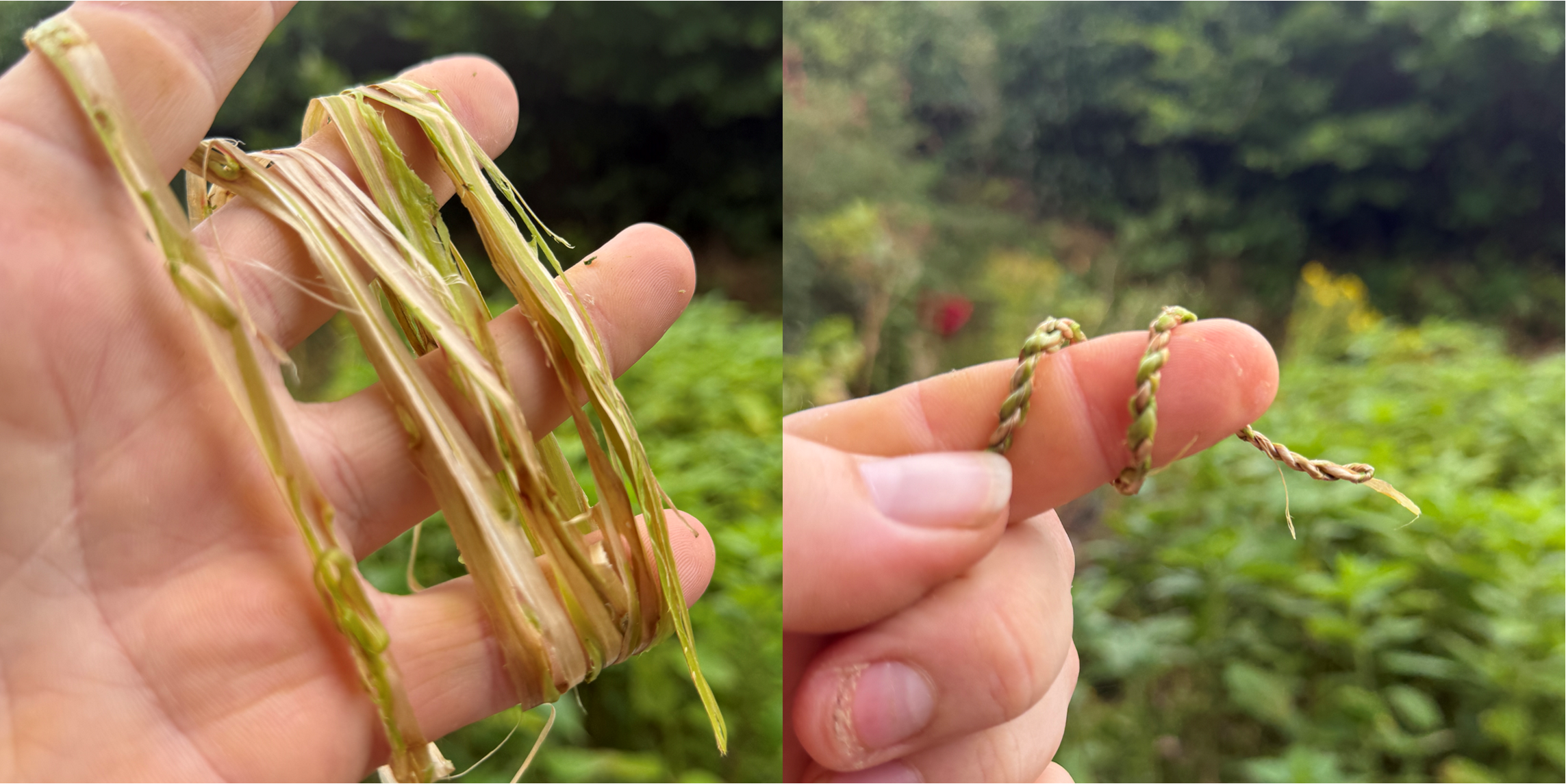
Rosebay Willowherb - stripped fibres (left) and corded (right)
In addition to all of these fantastic attributes, Rosebay Willowherb also makes decent cordage. It can be a little bit finicky compared to other staple cordage sources such as nettles but is equally abundant and has a decent strong product. After rolling the stems with a rolling pin-esque stick, split them and carefully separate the inner woody part from the fibrous outer layer. These can then be dried (to stop shrinkage when corded) and lightly rehydrated before twisting.
A truly remarkable plant with so many uses. If you are interested in getting more hands on, consider booking a session with us to learn more or practise some of the skills highlighted in this article. Click here to see our session options or click here to view some of the learning modules available.