

Bramble Rope
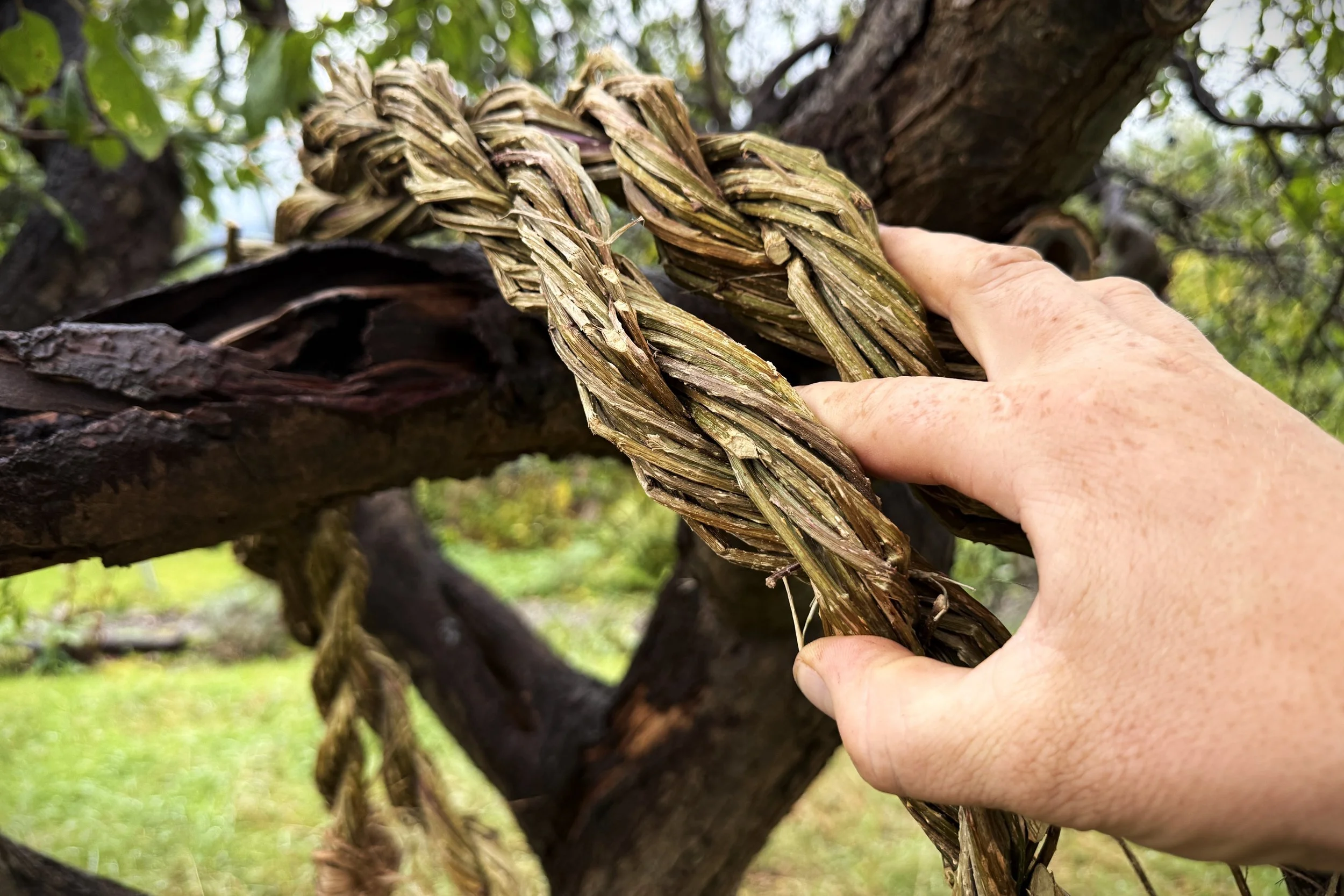
It is a frequent reiteration when teaching cordage skills that, in addition to their decorative aesthetics, natural strings and rope really do have a highly practical value. Yes, natural bracelets are fancy and are a great introduction to the skill but sometimes people don’t look beyond to the genuine strength and very real functionality of these products.
One of the best eye-catching examples to demonstrate this is bramble rope. It seldom fails to inspire clients and passers-by into looking deeper at the value of cordage and the large scale seems to dispel assumptions that a product which has been hand-made from natural materials on the spot couldn’t rival artificial, mass produced items delivered to your door - that scale again coming into play when they learn that it pulled a truck…but more on that later.
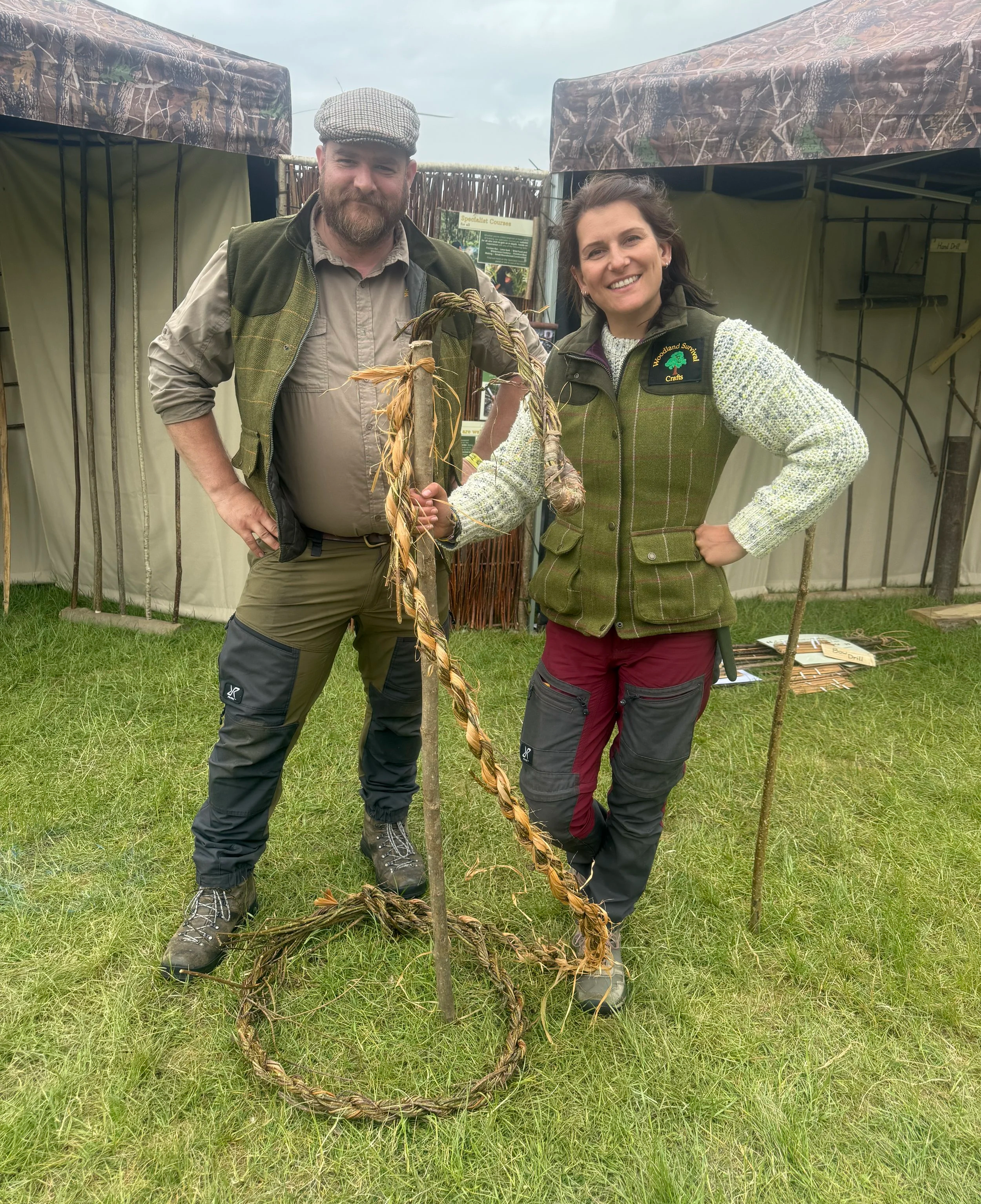
Emilia Stapley and Myself with our first bramble rope
I was first introduced to using whole brambles as a cordage medium a couple of years ago by colleague and mentor, Dave Watson of Woodland Survival Crafts whilst working with him at the Bushcraft Show. The brief he gave to the talented Emilia Stapley and myself, was to take the brambles he had brought and turn them into a rope capable of pulling a Landrover (all in front of an audience) to raise money for charity. He provided the challenge, said he would meet us at the main stage in a couple of hours and just like that he was gone. We looked at each other for a moment, internal cogs whirring, and agreed that due to whom this challenge was coming from it probably had some merit to it. We laid out the countless stems and simply began to roll and tuck using the same principles as any two-ply cordage. Before we knew it, we had a length of over five metres of rope which looked both durable and reminiscent of an anaconda. We took some thin strips of elm bark to reinforce the potentially vulnerable eyelet and were on our way. After a joyous, excitable victory lap carrying our new reptilian friend to the stage, everyone involved suddenly had a dawning realisation of how foolish we would look if it didn’t actually work. We had invited a few friends from Woodland Ways to help with the actual pull and the crowd was beginning to ramp up thanks to some charismatic comparing. As a safeguard, we added some last minute (completely unnecessary) lime bast to the rope and then everyone took their places. With the power of hindsight in tow, of course it worked flawlessly. To the extent that actually, we did a few runs with more people stood on the Landrover each time. The concept was a success, another string to the bow as it were.
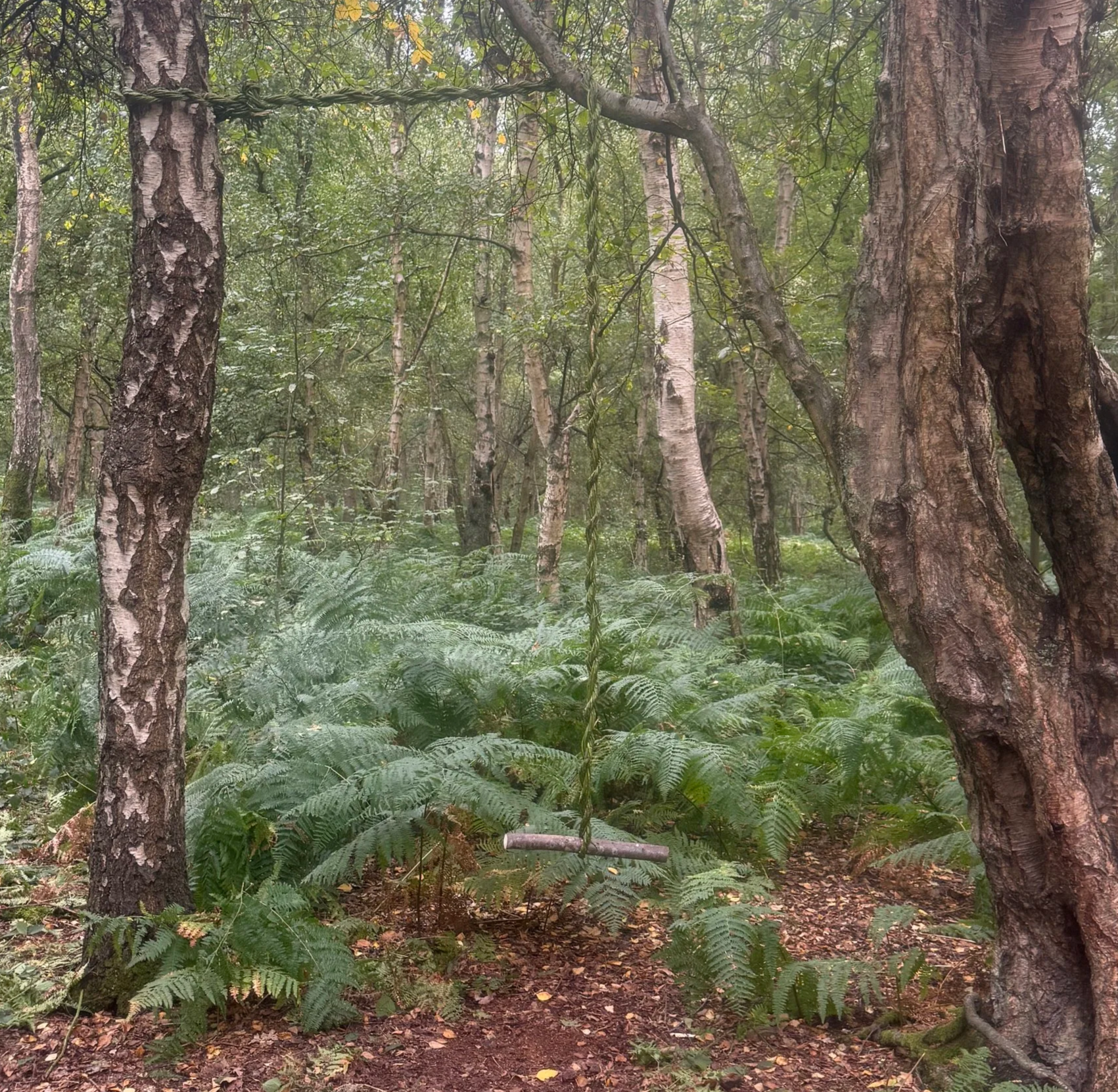
Bramble rope swing
Since this first experience, bramble rope has returned as an idea a few times. A personal favourite was a full length bramble rope swing made in half an hour by a small group of us at the 30th anniversary of Woodland Survival Crafts which was dubbed The Bushcraft Olympics. It held up well over a few months and was incredibly fun to create. It showcases both the strength of the material and creative applications for a plant often seen purely as a nuisance.
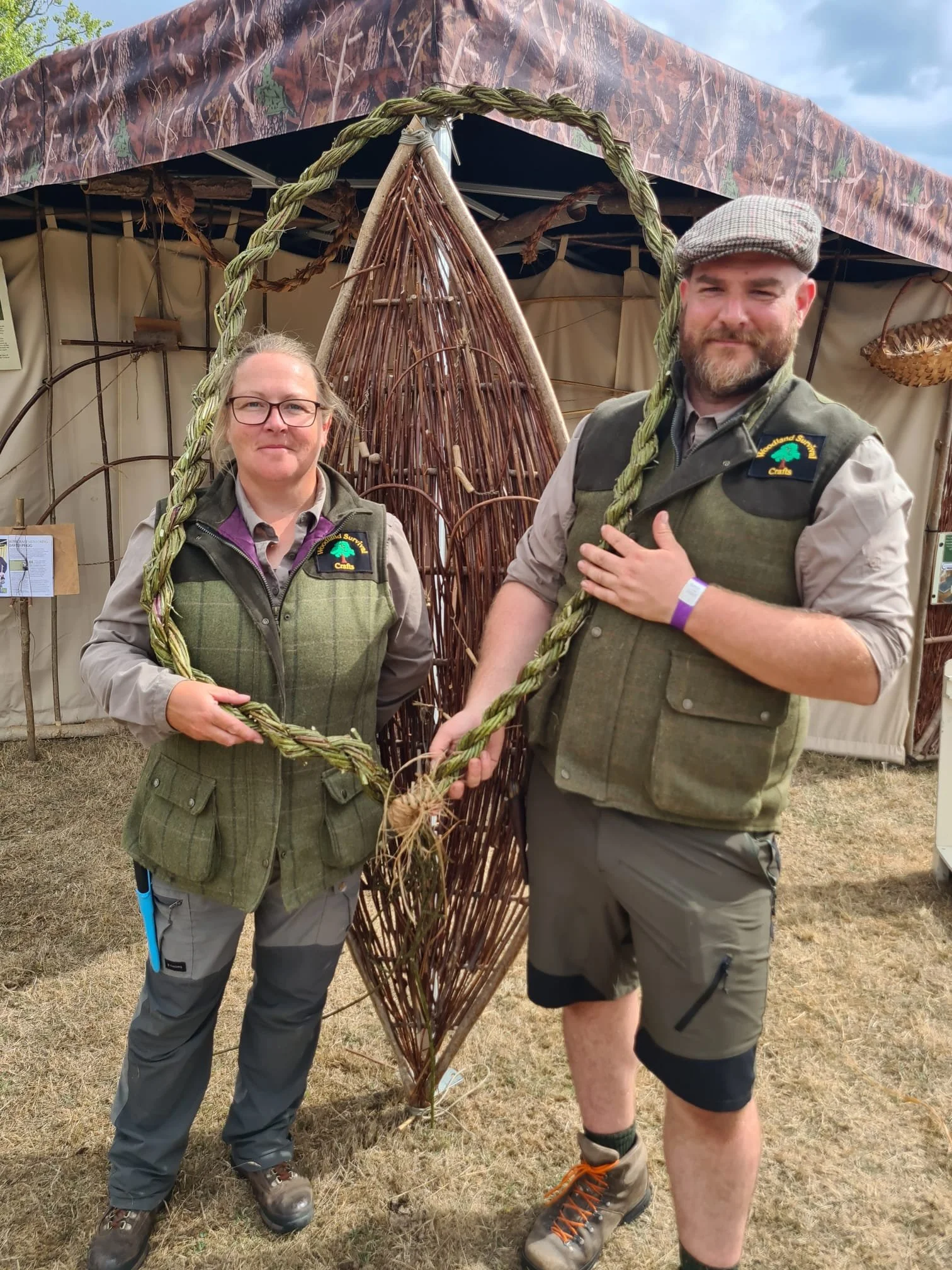
Tara Sills and myself with our new rope
This year, whilst again working for Dave at the must-see festival The Wilderness Gathering, we decided to give the rope pull another go. With the help of basket maker extraordinaire, Tara Sills, we stripped 40 brambles and made another one capable of pulling a pick-up truck owned by festival organiser, master craftsman and wilderness skills legend Roger Harrington. Some tips on making your own are highlighted below.
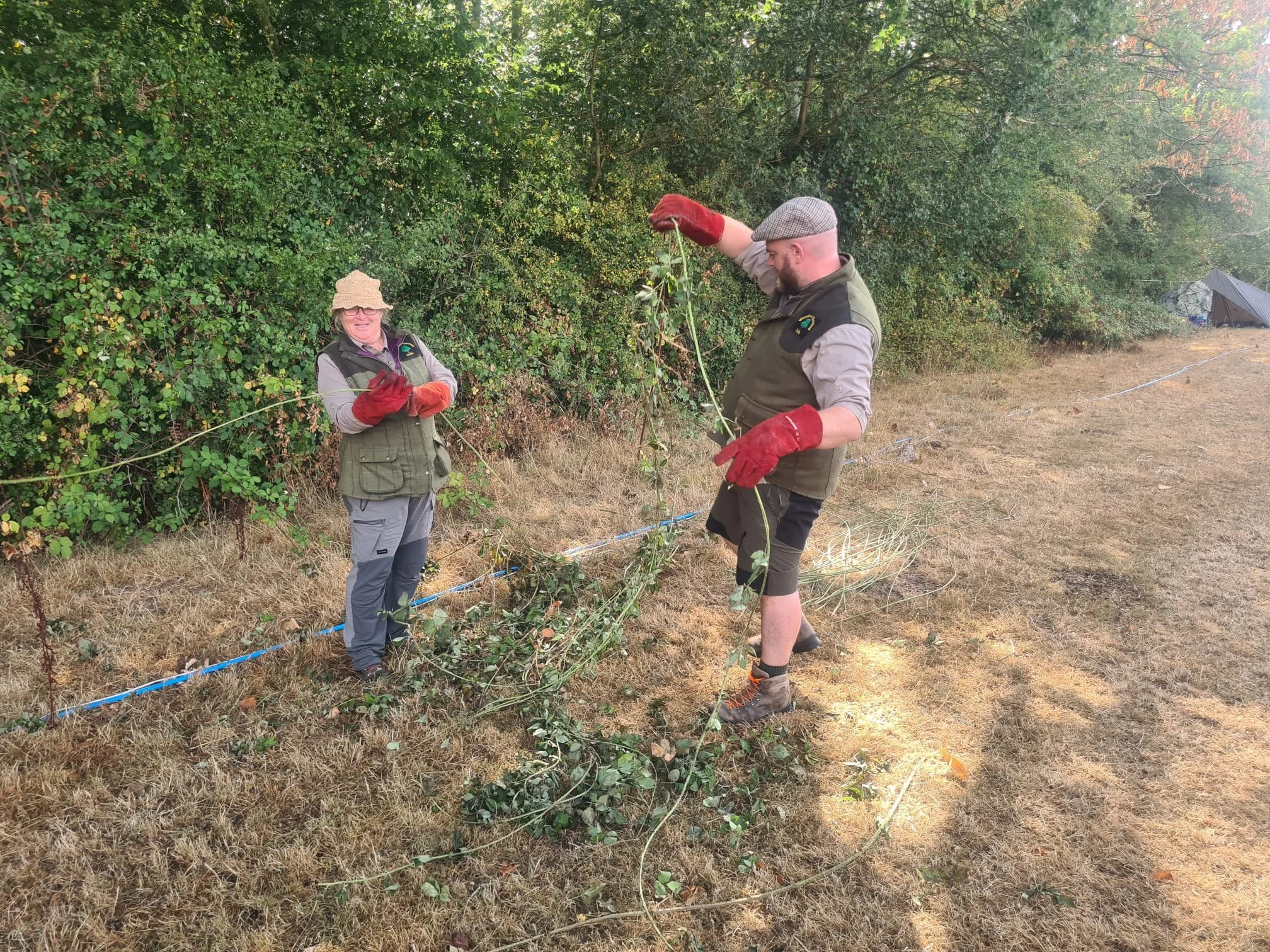
Bramble stripping
It sounds like a lot but 40 brambles won’t go that far and should be seen as a minimum. Because it is quite stiff when made, attachment is usually achieved using the eyelet as you don’t have the flexibility to coil or tie tightly around things. This means that you only have half strength unless you have another attachment method, meaning you need a fairly thick rope. For this example, we started with a thickness of eight brambles before twisting. Strip the thorns with either gloves or a tea towel, whatever you use will receive some degree of shredding so don’t use your best gloves or fanciest tea towel. Also, try to select newer growth runners - they are more pliable and have weaker thorns.
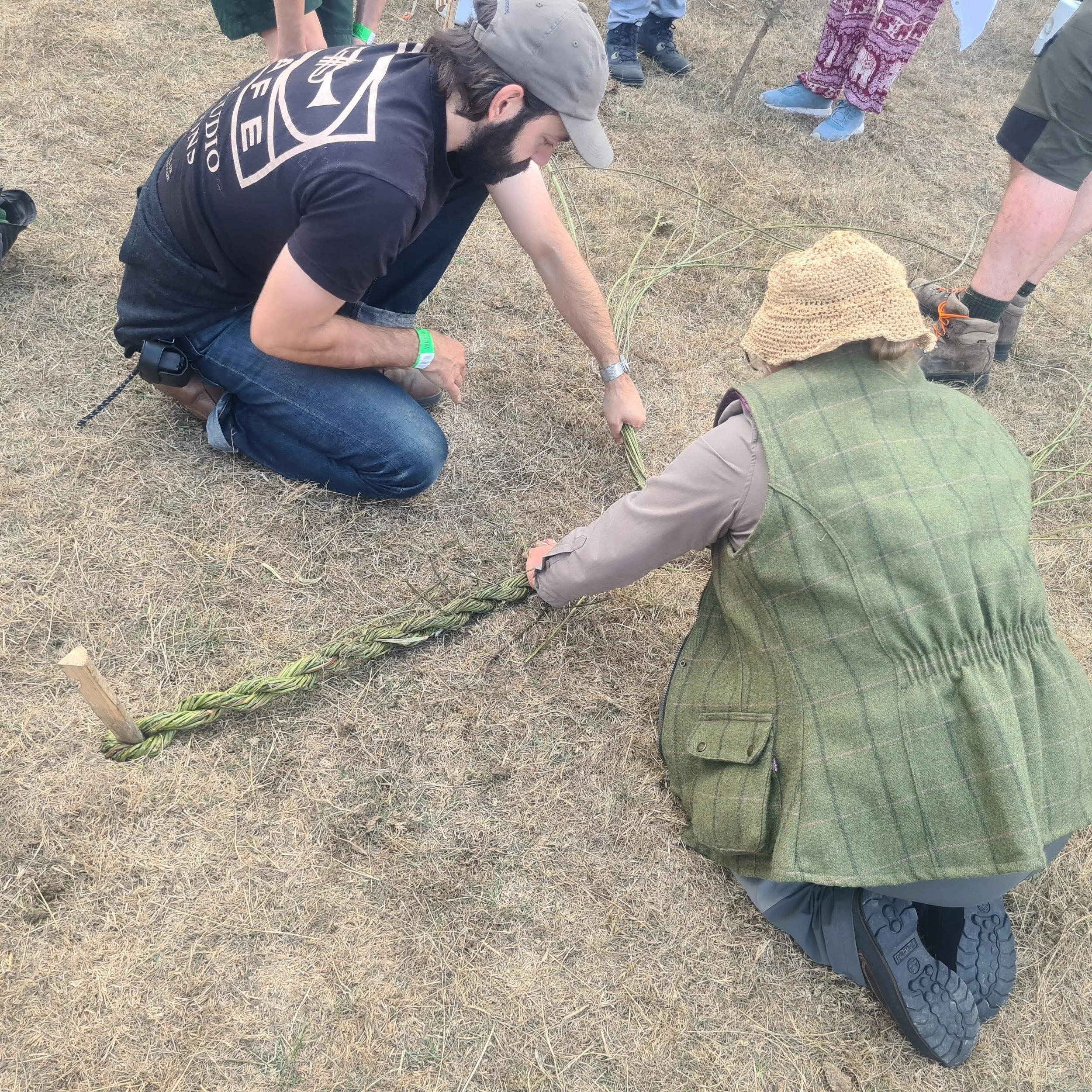
Twisting rope from a peg
When it comes to physically twisting and tucking, consider having the end fixed on a peg. You are essentially plying a handful thickness of withies which can take a fair amount of effort to twist. Having another person to handover the tuck each time can be helpful and having the end fixed makes the process so much more manageable. Try to add in at least one new stem’s thin end every one or two turns after the first few tucks but this may vary to attain a consistent thickness on each side. Due the thickness of individual terminations, it is important to have a decent bridge. If a terminating stem is particularly thick, consider thinning this with a knife a few tucks prior to it finishing to reduce the impact. Once done, either bind the loose end with some sturdy cordage or attempt to tie an overhand (this can be difficult). Clip off the loose ends from adding in to neaten the rope as you would with regular cordage.
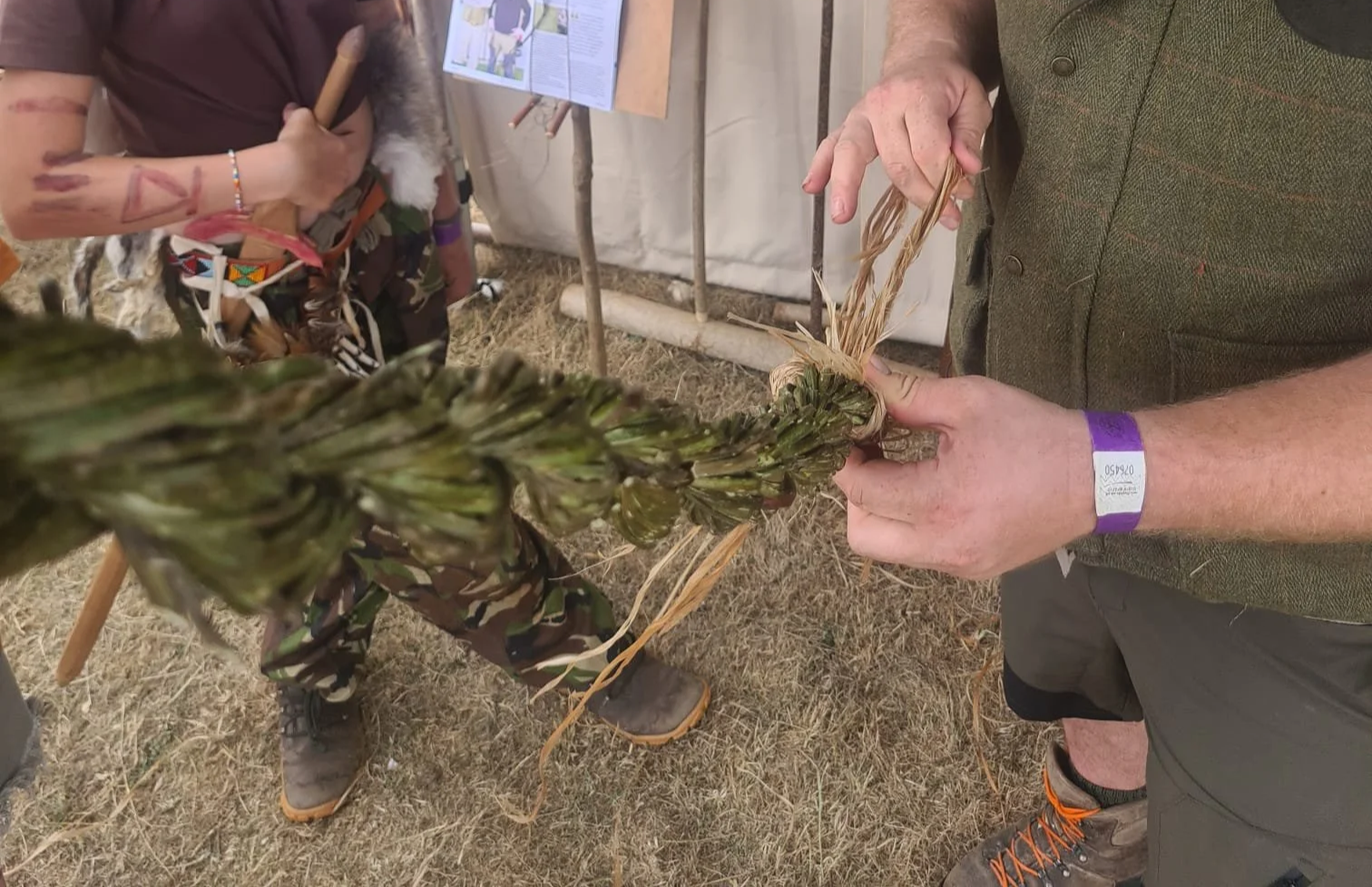
Adding other fibres to protect the eyelet from wear
If you are attaching straight onto the eyelet, it is a good idea to add a binding material to the eyelet to protect it from additional wear. We used lime bast here but have used elm bark before. It won’t provide much additional strength but it will help stop the brambles from separating or fracturing when under load. To use the full strength of the rope, you could sling underneath the eyelet and attach to that instead.
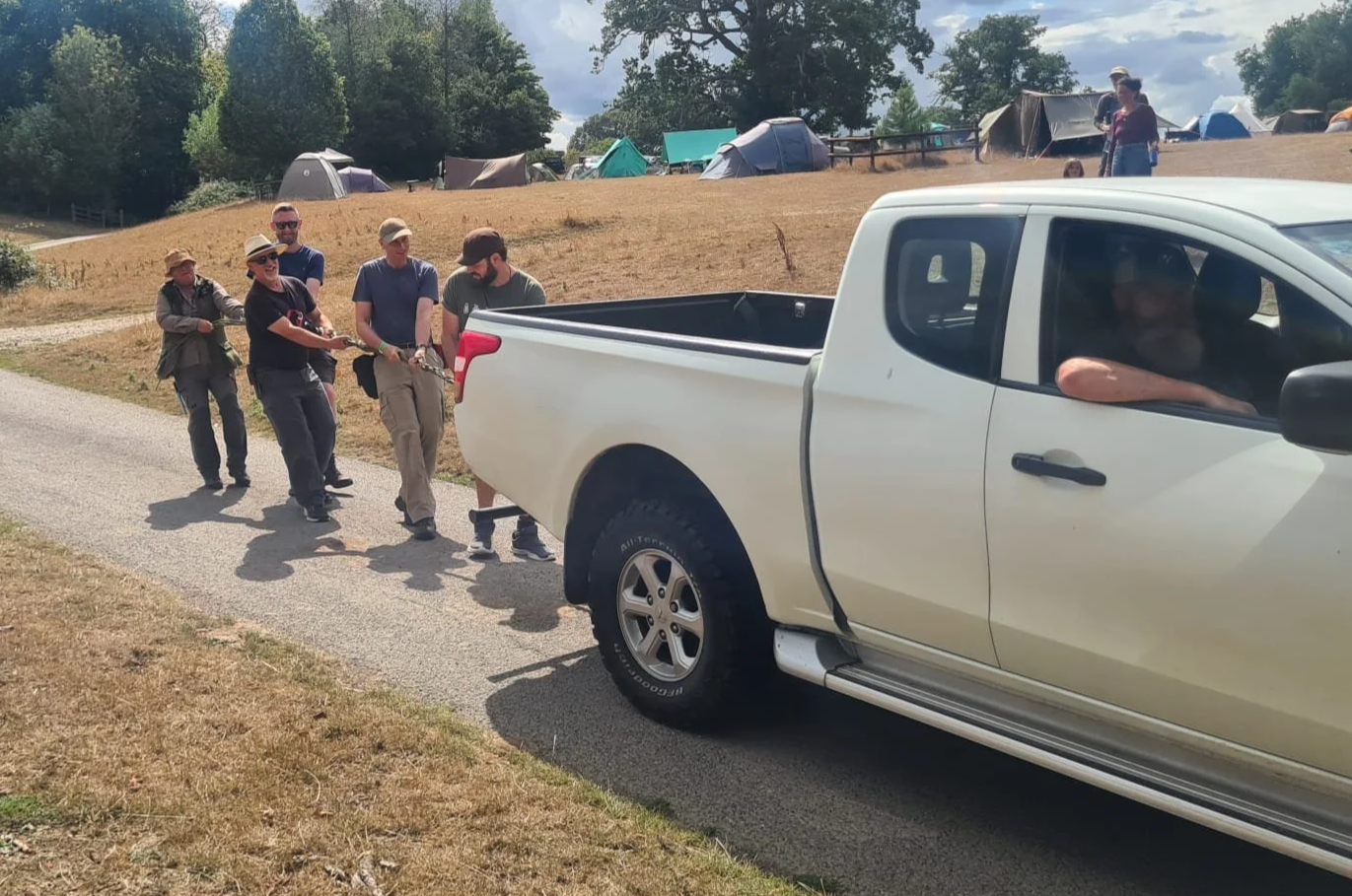
Using a bramble rope to pull a vehicle
Find some willing volunteers! The strength of these ropes is impressive. It would be interesting to see what it could pull before breaking but members of the public pulling a vehicle is not really the ideal environment for testing so we have always gone much stronger than required.
We hope you have found this article interesting, as always if this is something you would like to get hands of experience with making, get in touch to book a session with us here in the Lake District (click here to get in touch). Next week we will be sharing another interesting collaboration from the Wilderness Gathering this year - an adventure with flax. Have a good week.